STEAR
Logistic Optimisation Solutions
- Home
- Projects
- STEAR
- About
About STEAR
STEAR is a logistics project of PETRONAS. It was established to solve internal logistics problems such as vessel reservation, demand visibility and vessel tracking, and to minimize costs in the offshore logistics industry. STEAR is a first-of-its-kind industry-leading platform that aims to offer “logistics on demand” through an uberized model where demand and supply for shipping vessels are optimally balanced.
STEAR Challenges
PETRONAS built STEAR to address these challenges by streamlining logistics operations, cutting costs, enhancing visibility, and offering a flexible, on-demand model. The goal is to improve efficiency, reduce expenses, and set new industry standards for offshore logistics.
STEAR faces several operational challenges, including efficiently managing vessel schedules, coordinating between stakeholders, and maintaining accurate real-time tracking. The platform must also adapt to demand fluctuations, ensure effective resource allocation, and minimize operational downtime while handling large volumes of data and providing a user-friendly interface.

The Project & Modules
Role Description
As a Lead UI/UX Designer, I oversee the design and user experience of digital products, ensuring they are intuitive, visually appealing, and user-friendly. My role involves leading a team of designers, collaborating with stakeholders, conducting user research, and creating wireframes, prototypes, and high-fidelity designs. I focus on optimizing the user journey, improving usability, and maintaining consistency across all design elements to enhance overall user satisfaction and engagement.
Design Process & Deliverables
In my current role, I follow a streamlined UI Design Development Process. It starts with gathering requirements, followed by research, wireframing, prototyping, and creating high-fidelity designs. I collaborate closely with developers and iterate designs based on feedback, ensuring a user-centered and technically feasible outcome.
1. Requirement Gathering
Receive and review user stories provided by the Product Owner.
2. Research and Analysis
Conduct detailed research to understand the requirements outlined in the user stories.
3. Wireframing
Develop wireframes to outline the basic structure and layout of the UI, ensuring alignment with user stories and requirements.
4. Design Drafting
Translate the wireframes and prototypes into high-fidelity UI designs, incorporating detailed design elements
5. Initial Proposal and Collaboration
Present the first draft of the UI design in a grooming session. Collaborate with developers to gather feedback and discuss technical feasibility
6. Iteration
Refine the UI design based on feedback from the grooming session and further collaboration with the development team.
7. Submission and Asset Transfer
Finalize and submit the UI design to the development team for implementation
UI/UX Agile Design Workflow
Effective collaboration and structured workflows are essential for successful UI/UX teams. By using a sprint-based approach, teams can manage projects efficiently, ensuring continuous progress and adaptability. This workflow guides UI/UX teams from receiving a project brief to reflecting on completed work, promoting continuous improvement and high-quality deliverables.
Product & Tech Collaborations
Here’s an outline of how deliverables are managed between Prod and Tech: The process is cyclical and adapts according to task and sprint planning. Both teams collaborate closely to ensure alignment and adjust workflows as needed throughout each sprint.
Design System
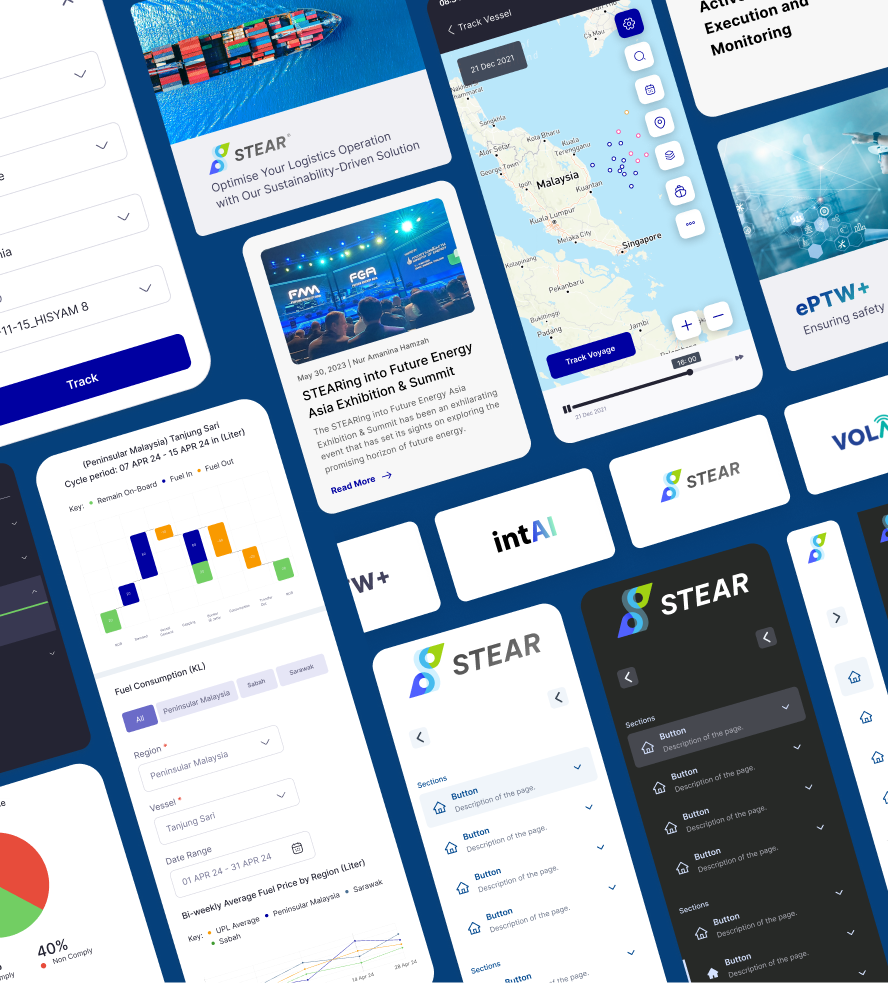
I led the creation of STEAR Design Language System (DLS 2.0), establishing a structured and scalable foundation for product design across the platform. This includes defining reusable UI components, interaction patterns, typography, color systems, and design guidelines to ensure consistency, efficiency, and a unified user experience across all modules.
Platform+ (Core System)
Project Overview
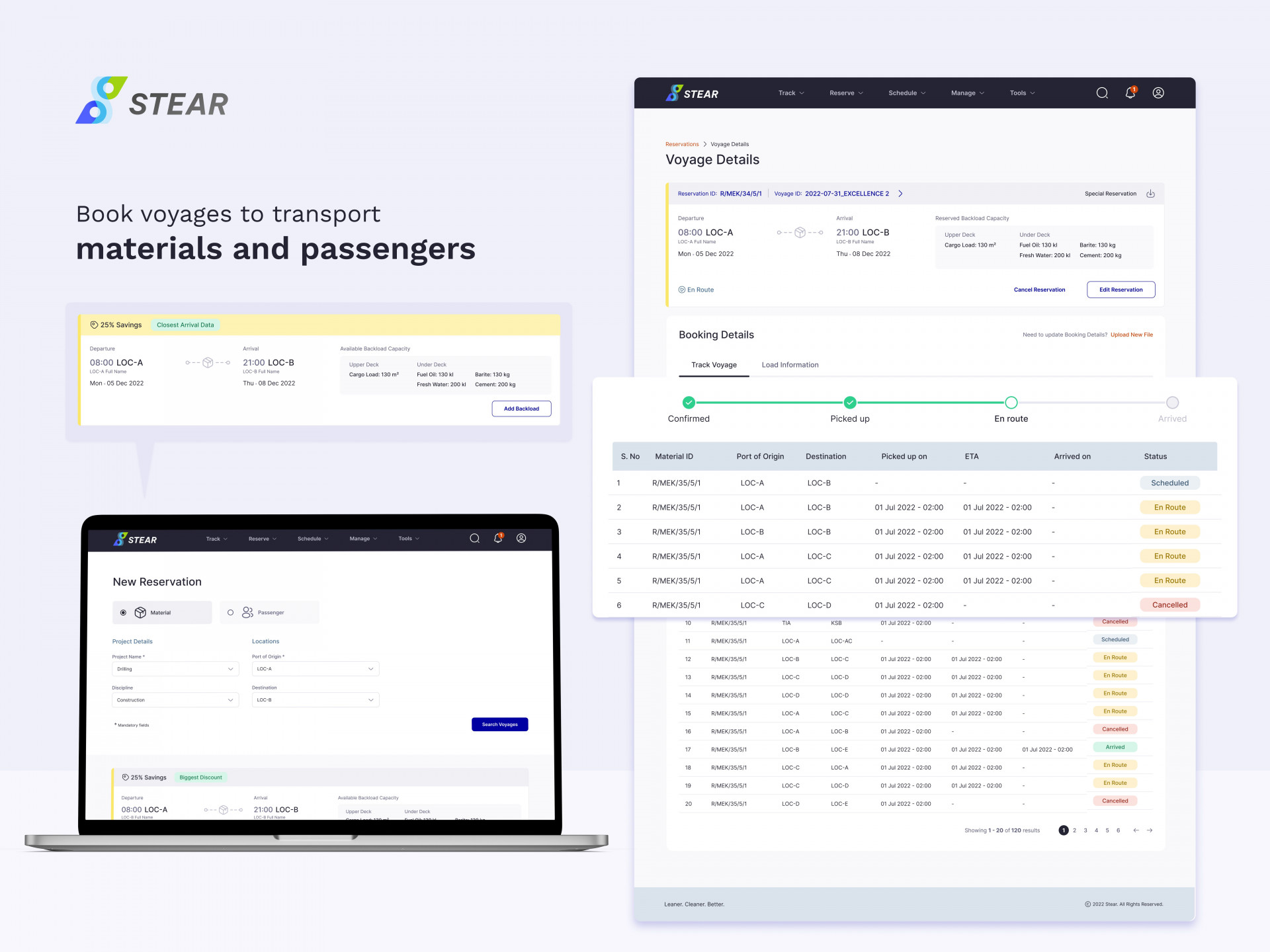
Platform+ is an industry-leading, first-of-its-kind maritime logistics platform developed by PETRONAS. Designed to operate as an “Uberized” logistics-on-demand model, the system optimally balances supply and demand for shipping vessels within the complex offshore logistics ecosystem.
By digitalizing end-to-end maritime operations, Platform+ shifts the industry away from fragmented legacy workflows into a unified, data-driven ecosystem. The platform serves as a single source of truth for vessel tracking, reservation management, and predictive scheduling, ultimately aiming to set a new benchmark for offshore efficiency and cost-optimization.
Problem Statement
The offshore logistics sector inherently suffers from severe fragmentation, unpredictable operating environments, and high capital costs. Before the introduction of Platform+, PETRONAS faced several critical operational pain points:
Fragmented Demand Visibility: Lack of early demand forecasting led to reactive scheduling, causing either severe vessel shortages or costly under-utilization of fleet capacity.
High Vessel Idling Time (VIT): Poor coordination between port authorities, crew, and offshore platforms resulted in vessels idling extensively, leading to massive unnecessary fuel consumption and high operational costs.
Manual & Inefficient Scheduling: Relying on manual planning methods made it nearly impossible to dynamically adjust schedules based on unpredictable weather patterns, breakdowns, or fluctuating resource demands.
Tracking & Communication Gaps: Stakeholders operated in silos without real-time tracking data, causing delayed site preparations, poor cargo handoff coordination, and a lack of post-voyage analysis to identify avoidable delays.
Goal / Objective
The primary objective of Platform+ is to build a lean, automated, and predictive maritime logistics ecosystem that achieves the following:
Maximize Asset Utilization: Balance vessel supply and demand through an agile, on-demand framework, ensuring high deck and seat utilization.
Minimize Operational Costs: Drastically reduce Vessel Idling Time (VIT), lower fuel consumption, and optimize route sequences to minimize carbon emissions.
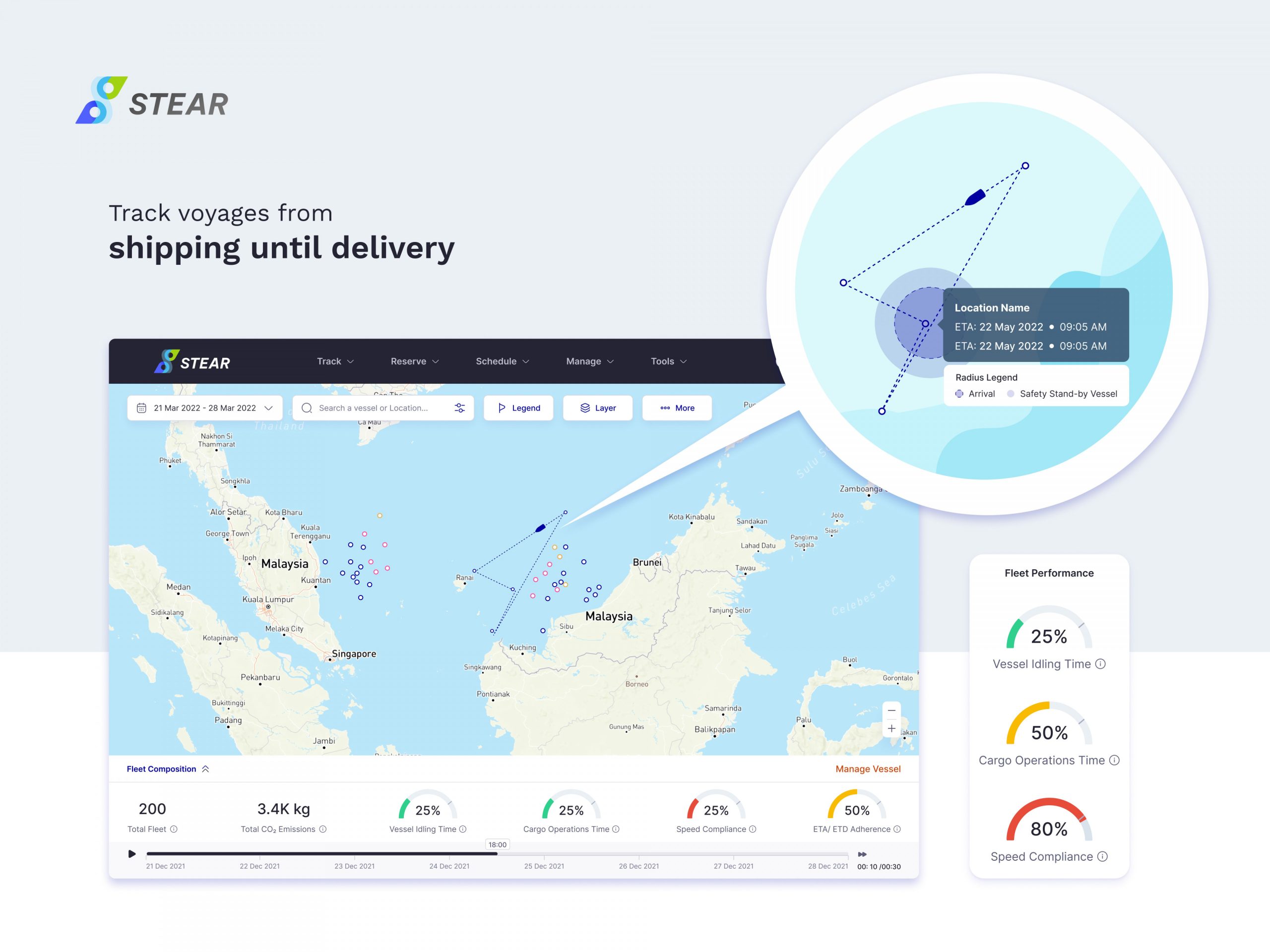
Enhance Real-Time Visibility: Provide absolute transparency across the supply chain, enabling stakeholders to track voyages seamlessly from shipping to final delivery.
Drive AI-Powered Execution: Shift from reactive planning to proactive execution by leveraging AI for advanced voyage and sequence optimization.
Key Features & Solutions
1. Demand
(Reservation & Declaration)
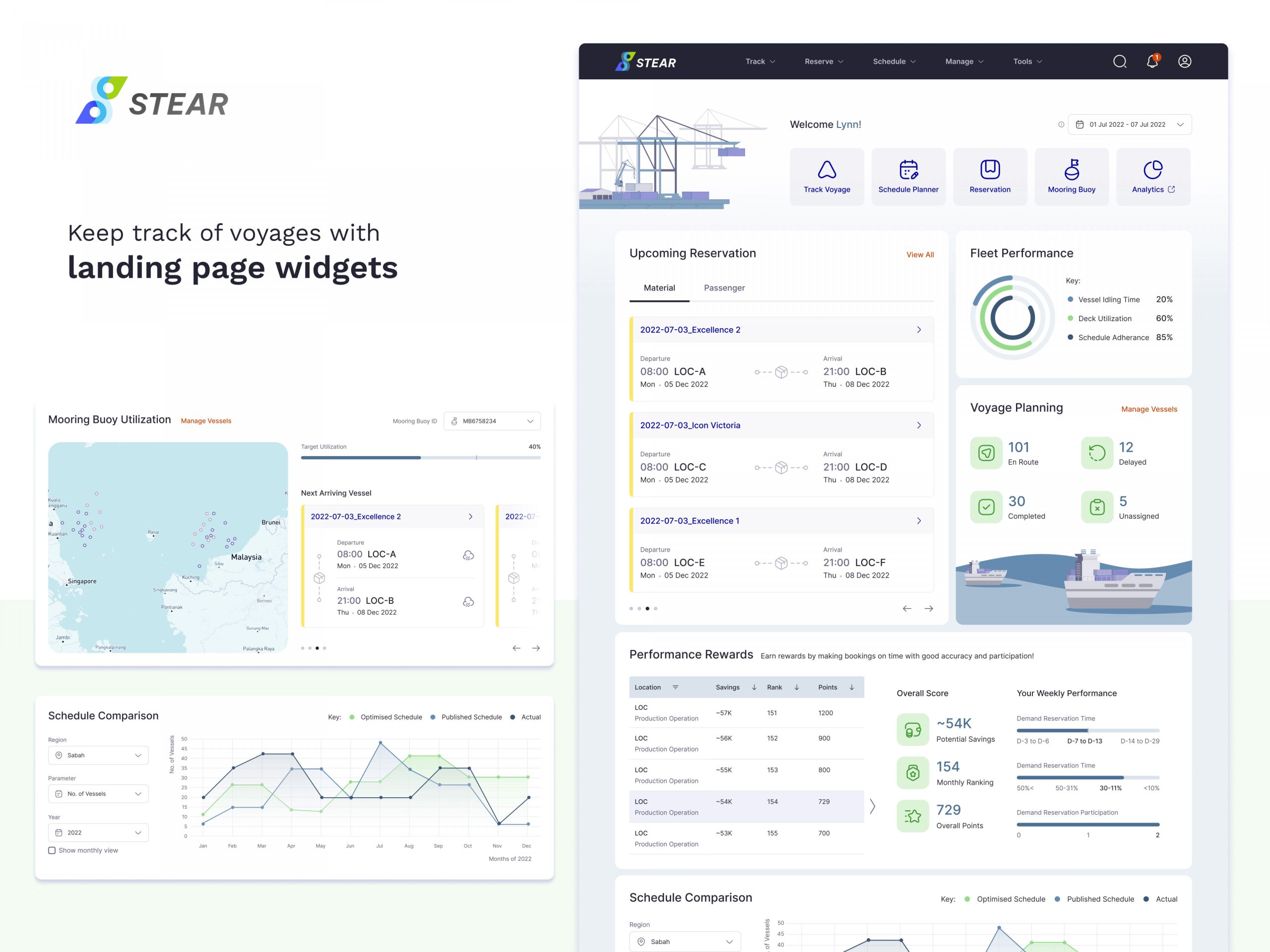
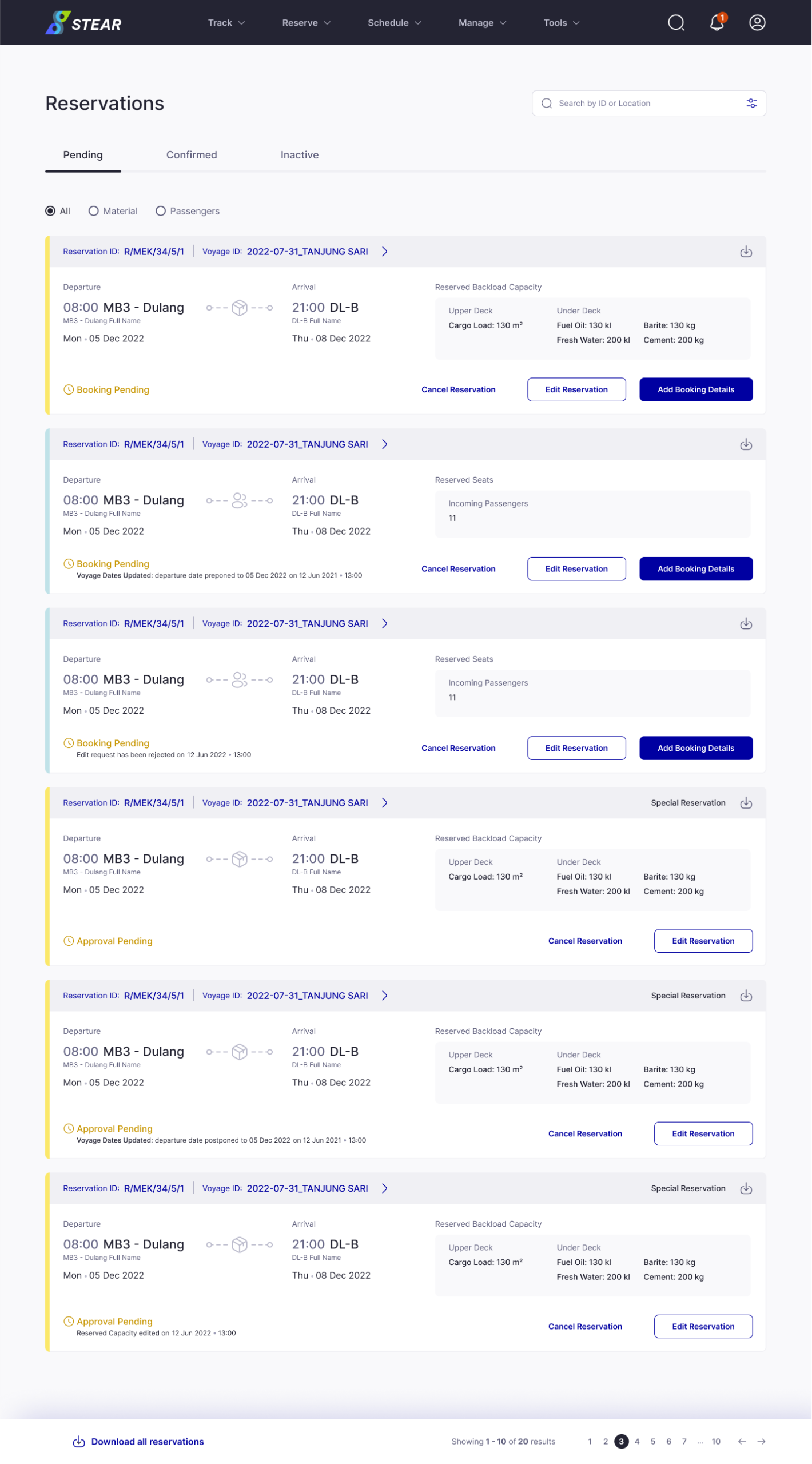
Accurate forecasting and centralized requests for smarter voyage setups
- Demand forecasting by anticipating the demand 30 days prior departure to forecasting
- Centralised platform for demand reservation
- Human engineering-infused to incentivise user behavior
2. Optimise
(Routing & Scheduling)
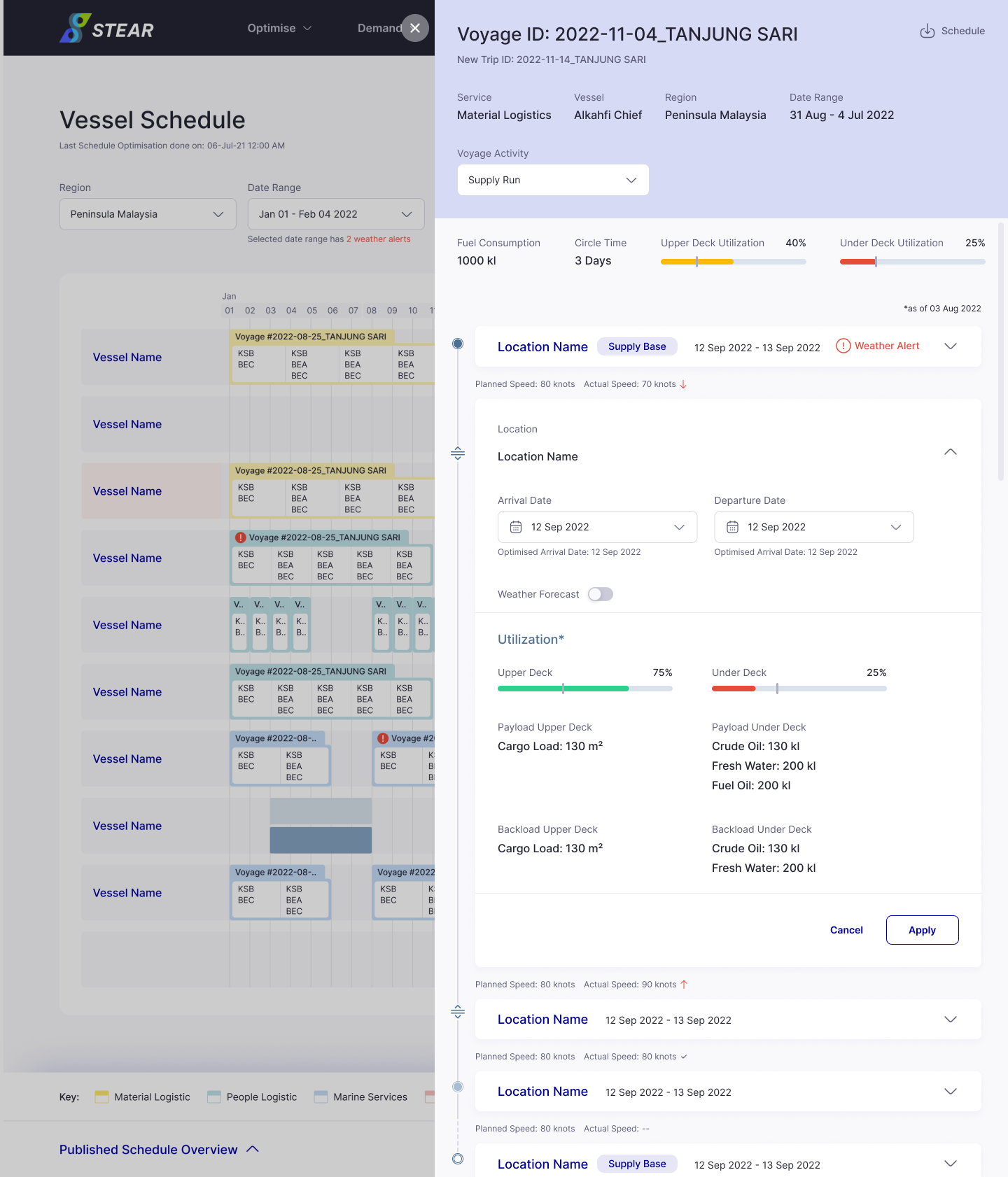
Dynamic optimisation for better voyage planning
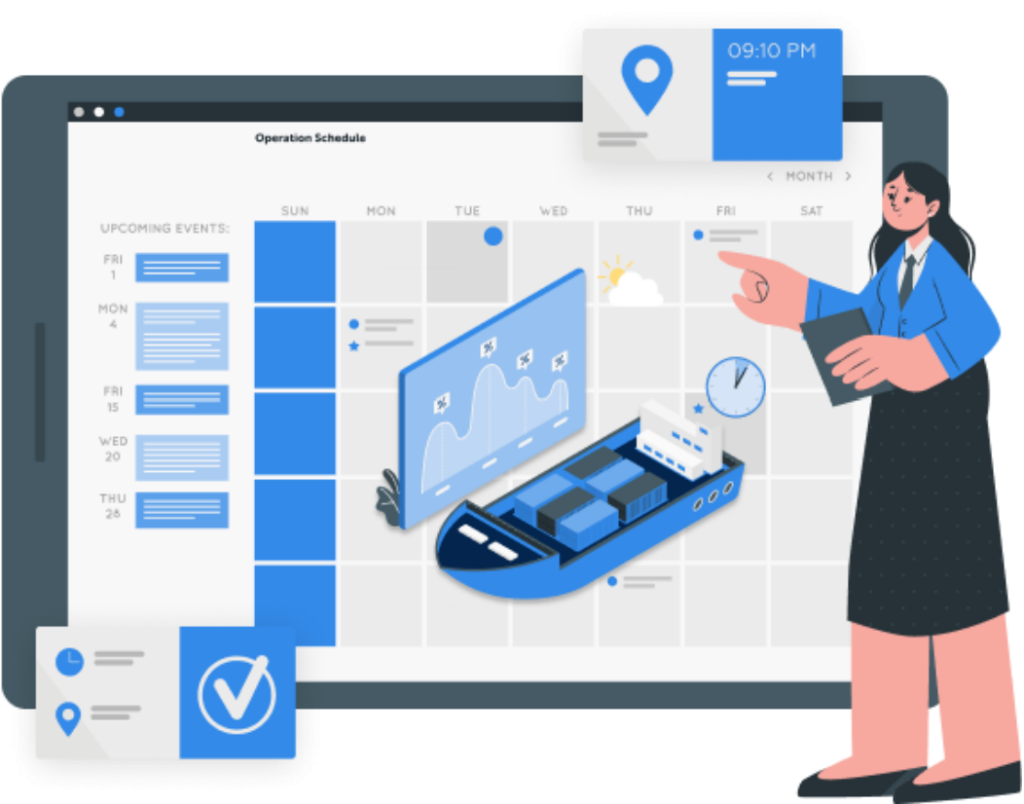
- AI-backed schedule generation
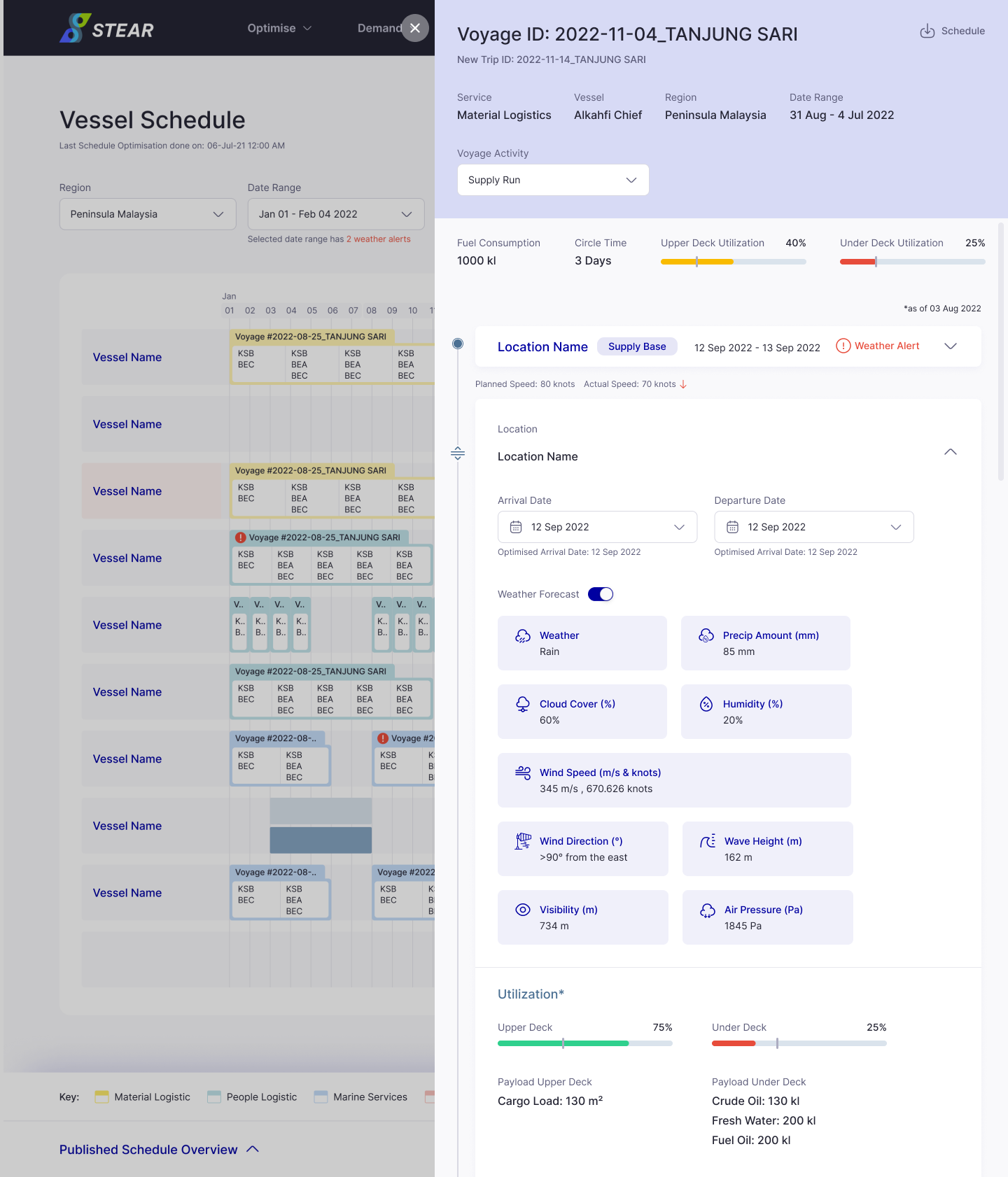
- Route optimisation based on actual demand & weather forecast
- Generation of deck sharing opportunity across users

3. Execute
(Voyage Tracking)
Voyage visibility for execution as close to planned
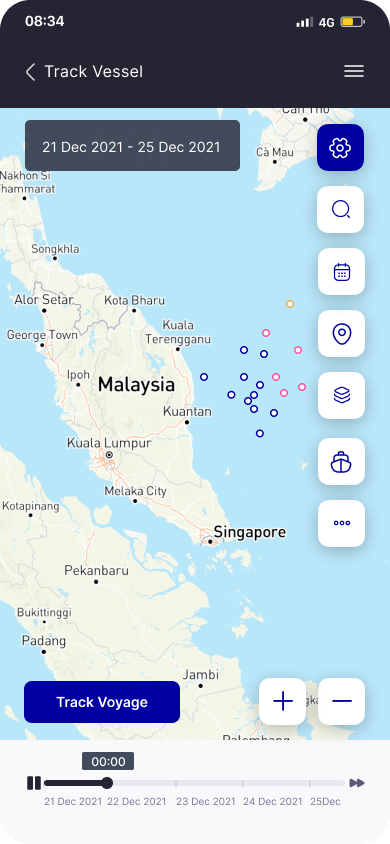
- Active intervention based on near real-time Vessel visibility
- Voyage recording which allows post-voyage playback
- Enhanced collaboration experience between users

Persona 1: The Logistics Planner (Primary System User)
“Nor Asmahan” | Senior Marine Logistics Planner
Age: 34
Industry: Upstream Logistics / Supply Chain Operations
Location: Kuala Lumpur (PETRONAS Twin Towers)
System Focus: 1. Demand & 2. Optimise Pillars
“Manually planning vessel schedules around unpredictable weather and constantly shifting platform requests used to be a nightmare. I need early, centralized demand visibility so I can optimize our fleet capacity instead of constantly reacting to capacity crises.”
Goals & Objectives in Platform+:
Eliminate reactive scheduling by getting a clear window into vessel demand at least 30 days before a scheduled departure.
Maximize vessel capacity by identifying smart deck-sharing and seat-sharing opportunities across different offshore teams.
Leverage AI tools to quickly generate reliable voyage routes and daily schedules that factor in real-time weather forecasts.
How They Use the Platform:
Centralised Demand Hub: Checks the Demand module to review all incoming vessel reservations and forward-capacity declarations in one unified screen.
AI-Backed Schedule Generation: Uses the Optimise engine to auto-generate efficient daily schedules, instantly adjusting routes based on actual resource constraints.
Deck Sharing Feature: Reviews automated system recommendations to combine smaller cargo requests onto a single vessel, maximizing deck space usage.
Persona 2: The Fleet Operator & Controller (Execution User)
“Captain Fadil” | Marine Operations Supervisor
Age: 41
Industry: Fleet Operations & Marine Control
Location: Kemaman Supply Base (KSB), Terengganu
System Focus: 3. Execute Pillar
“Vessel Idling Time costs us thousands of dollars an hour in wasted fuel. If a vessel gets delayed by a storm or a slow cargo handoff, I need to know instantly so we can adjust operations and stop wasting money.”
Pain Points:
High Idling Costs: Massive operational budgets and fuel were constantly wasted due to vessels sitting idle at ports and platforms.
Communication Silos: Faced massive blind spots and delays because port authorities, offshore crews, and platform teams did not share real-time tracking data.
No Post-Voyage Insights: Had no way to replay past trips, making it impossible to analyze why delays happened or how to fix them for the next journey.
Goals & Objectives in Platform+:
Drastically reduce Vessel Idling Time (VIT) at ports and offshore platforms to save on fuel costs and lower emissions.
Break down communication silos between port authorities, offshore crews, and base operators during live voyages.
Review past voyages using data-driven playbacks to pinpoint exactly where operational delays happened.
How They Use the Platform:
Near Real-Time Tracking: Keeps the Execute live dashboard open to monitor vessel movements and location pings across the fleet.
Active Intervention Alerts: Receives instant notifications if a vessel drifts from its planned sequence, allowing him to step in and coordinate immediate port or crew changes.
Post-Voyage Playback: Uses the voyage recording feature during weekly operational reviews to replay completed trips, helping his team spot and eliminate recurring delays.
Web UI
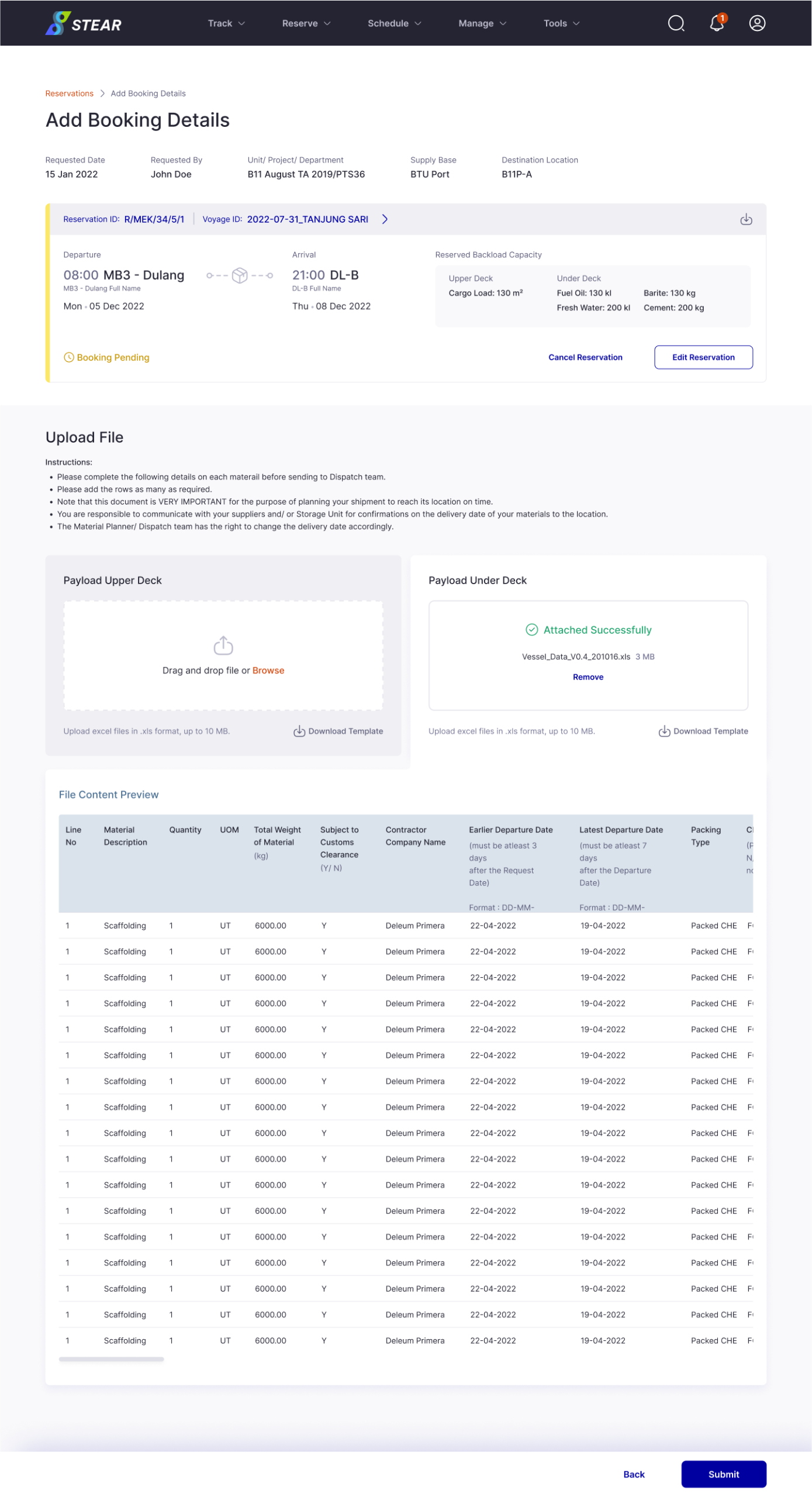
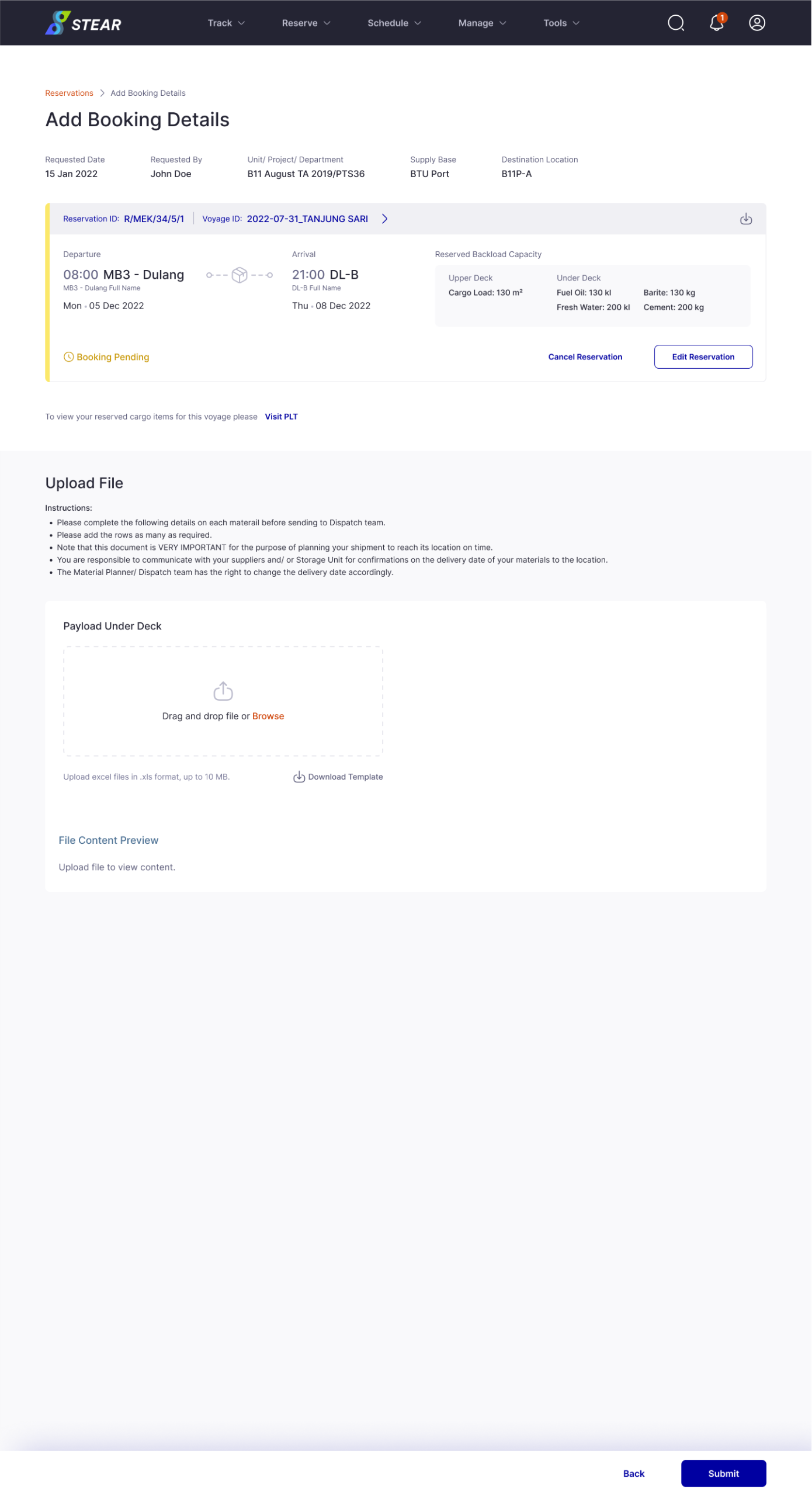
The overview of the UI design for our on-demand web system, specifically focusing on the demand, optimise and execute module. Our design aims to deliver a user-friendly, efficient, and visually appealing interface that enhances user experience and functionality.
Mobile UI
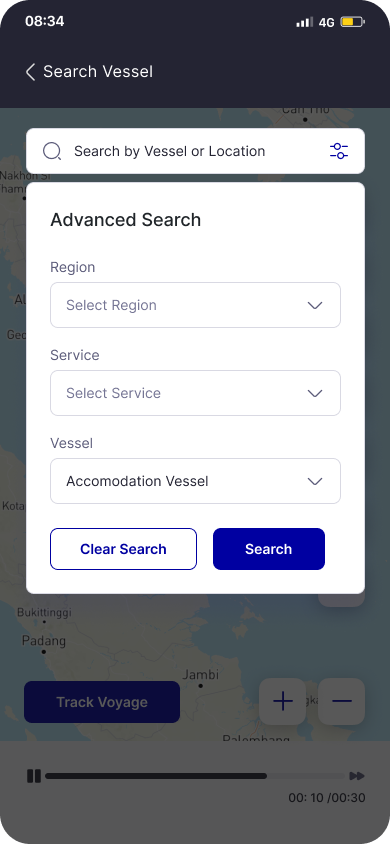
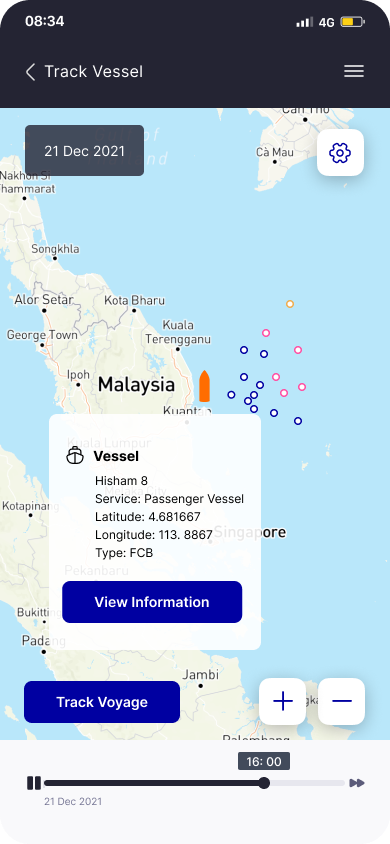
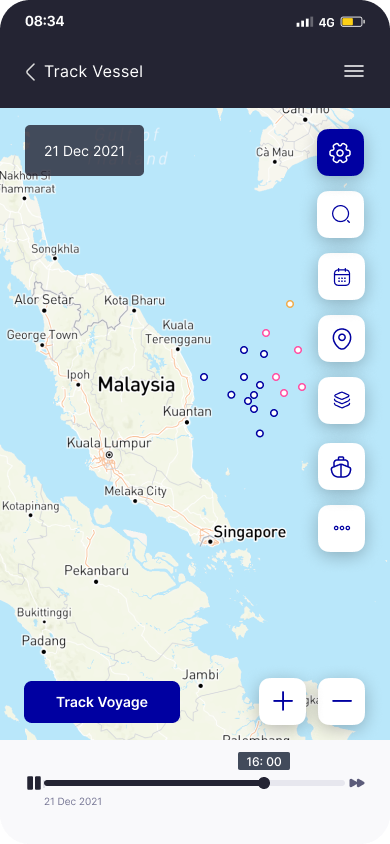
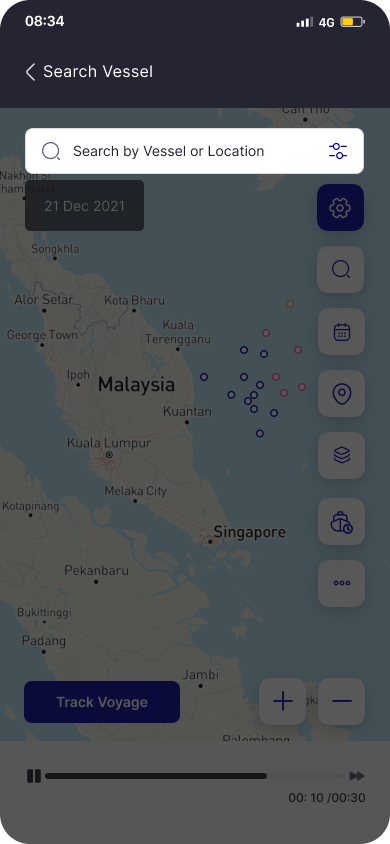
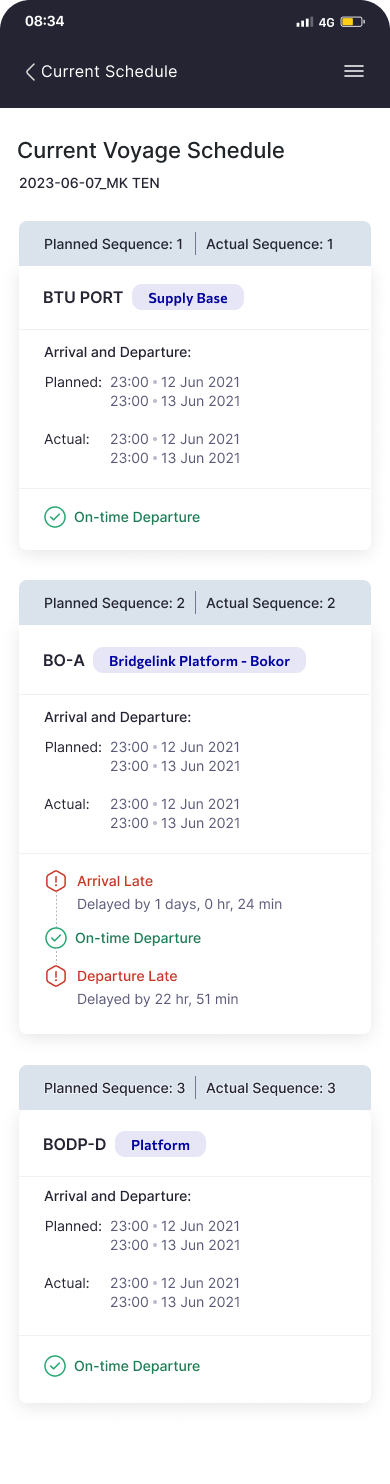
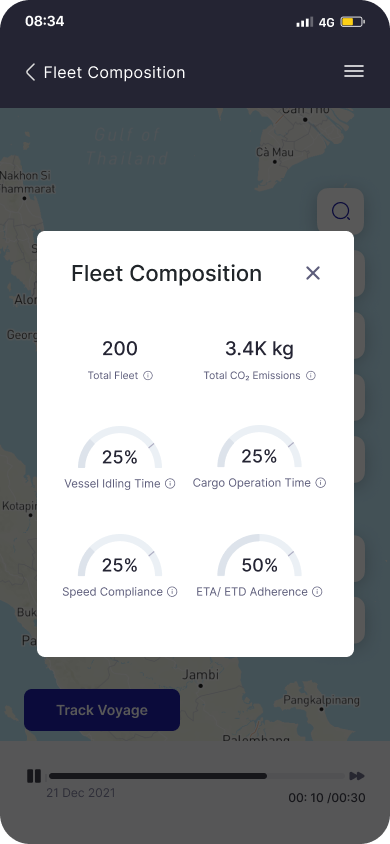
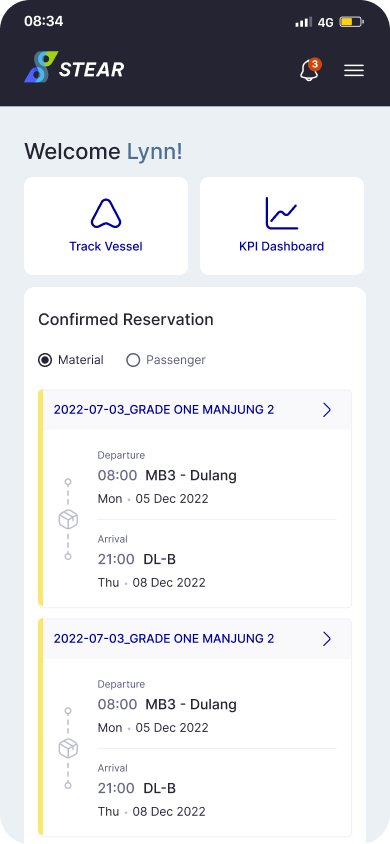
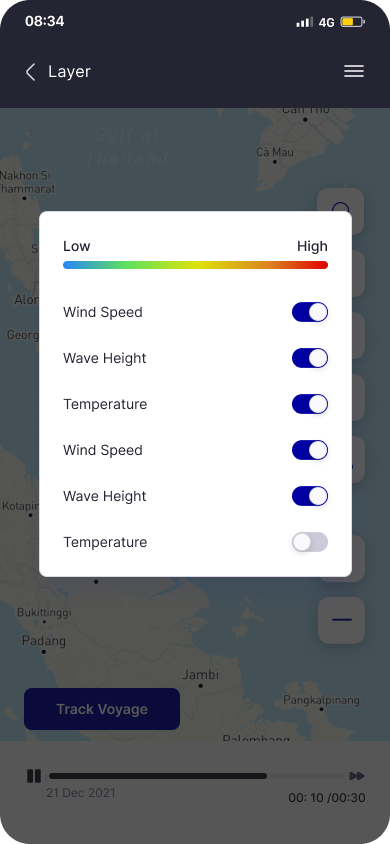
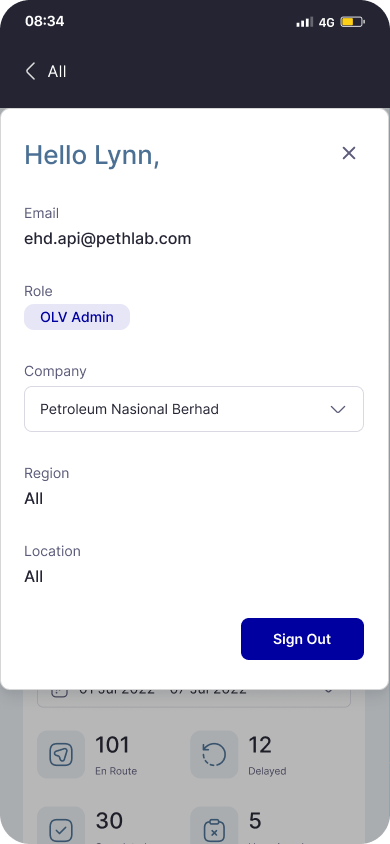
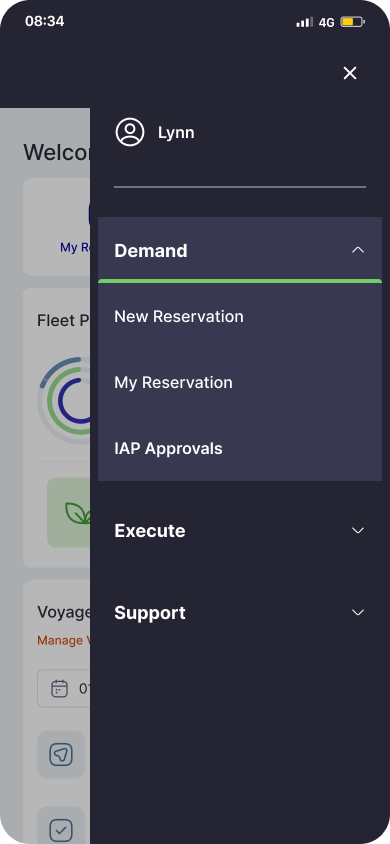
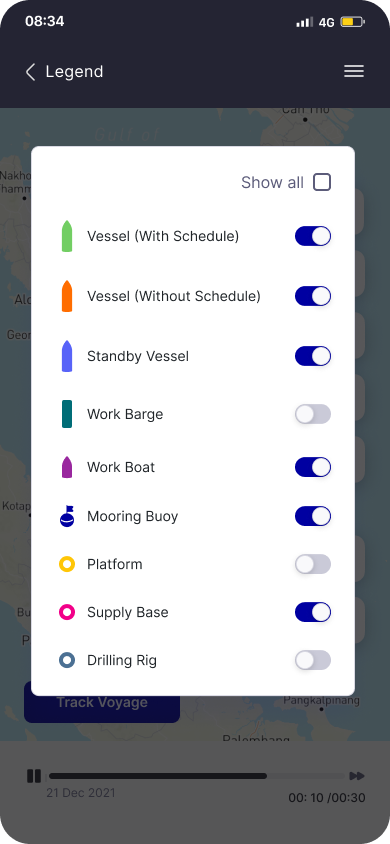
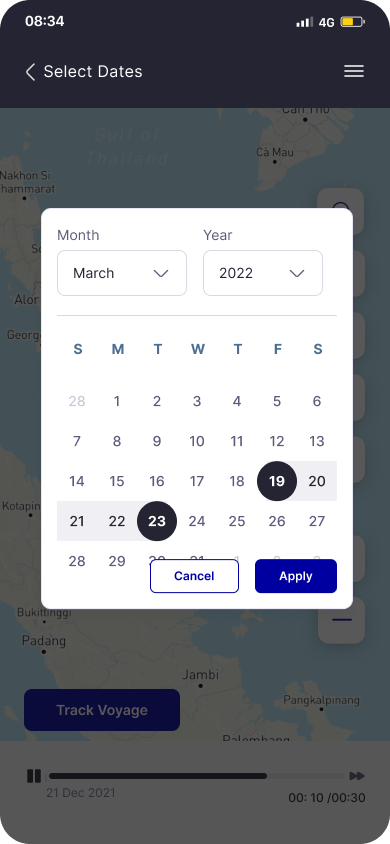
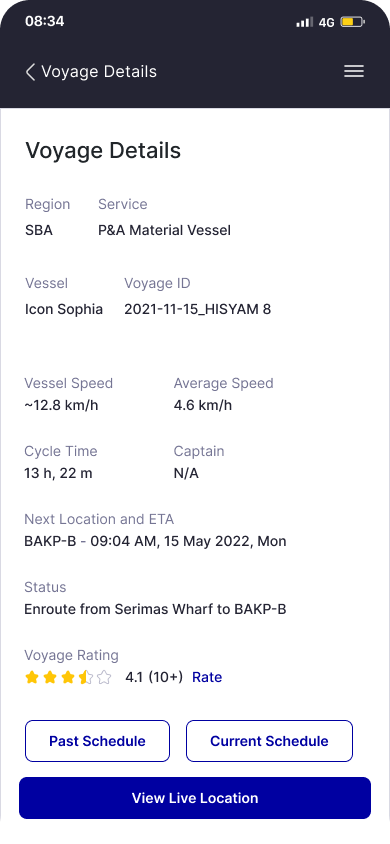
Mobile View Demo (Execute)
Mobile UI Design Screen


Marketing Website for Platform+
Project Overview
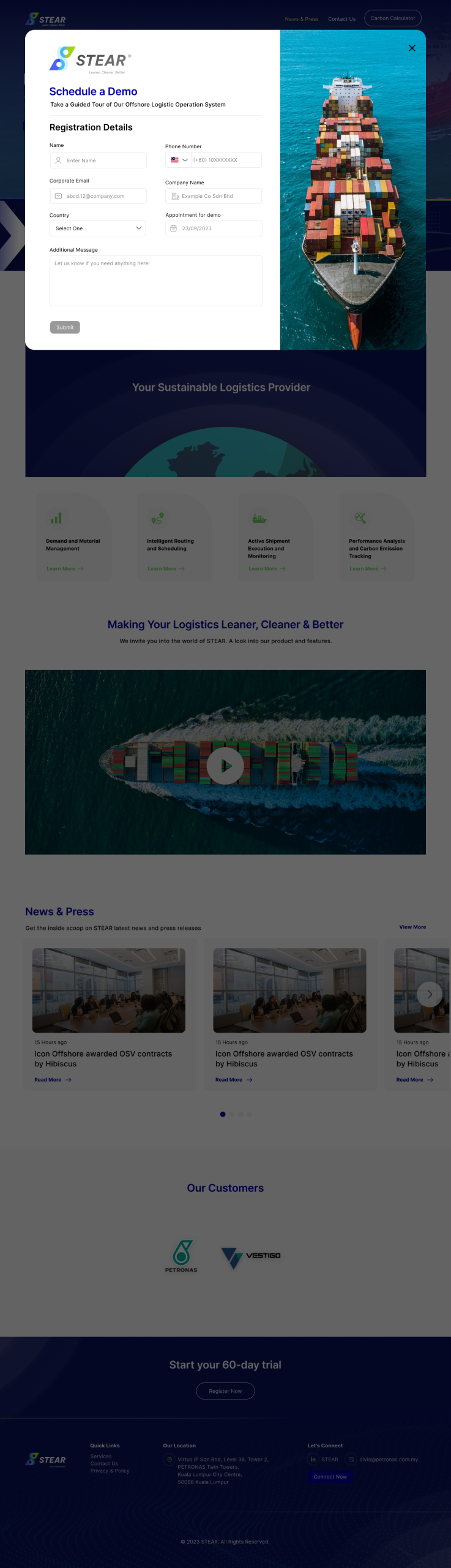
STEAR is a logistics platform under PETRONAS designed to optimise offshore vessel operations through a smart, demand-driven system. The marketing website was created to introduce STEAR to external clients, communicate its value proposition, and position it as a modern, “logistics-on-demand” solution for the offshore industry.
My role was to design the end-to-end user experience and interface for the marketing website, working closely with stakeholders and product teams to ensure clarity, consistency, and strong brand storytelling.
Problem Statement
The STEAR platform was highly technical and system-focused, making it difficult for external audiences to quickly understand its value. There was no dedicated digital presence to clearly communicate what STEAR is, how it works, and why it matters to potential clients.
Goal / Objective
- Clearly explain STEAR’s value proposition to external stakeholders
- Translate a complex system into a simple, engaging narrative
- Build trust and credibility with potential clients
- Drive awareness and interest in STEAR’s capabilities
Key Features & Solutions
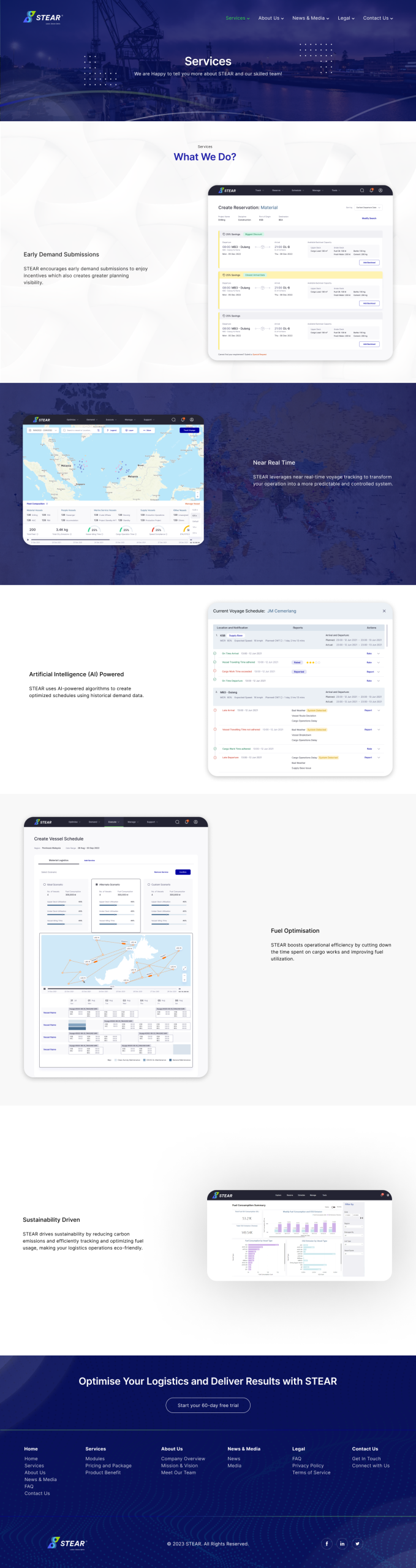
- Clear product storytelling sections (What STEAR is, How it works)
- Value proposition breakdown for clients and partners
- Simplified visualization of complex logistics workflows
- Strong CTA sections for engagement and enquiries
- Modular layout for scalability and future updates
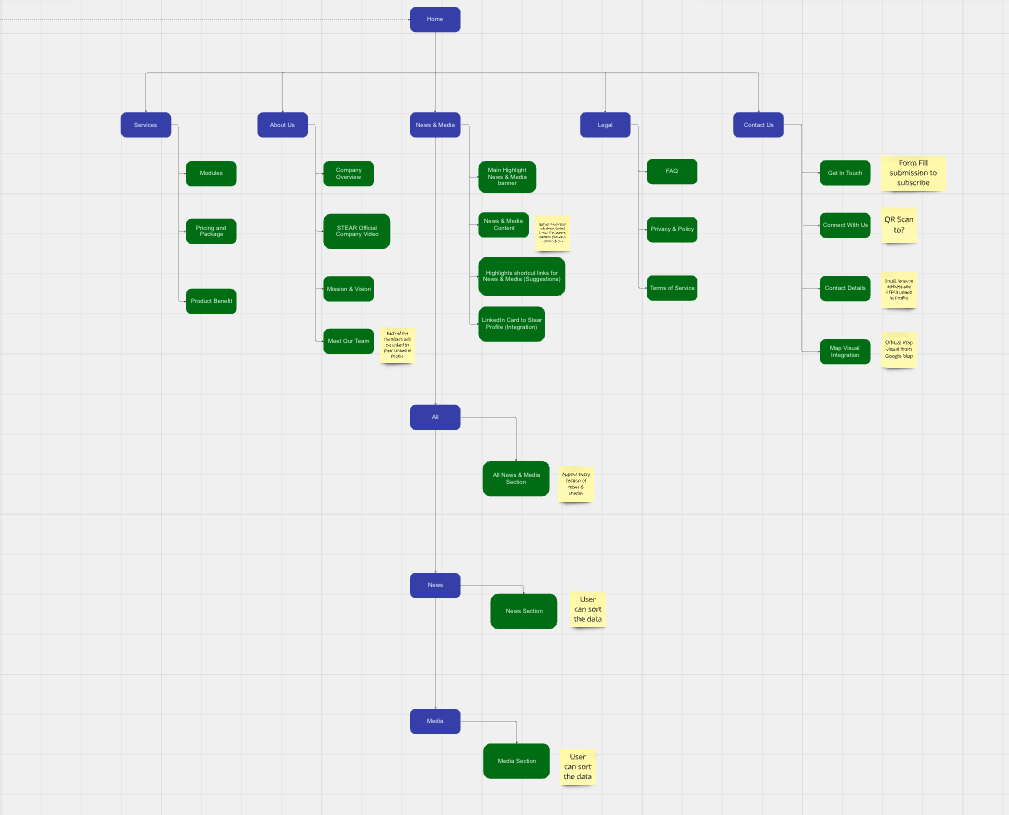
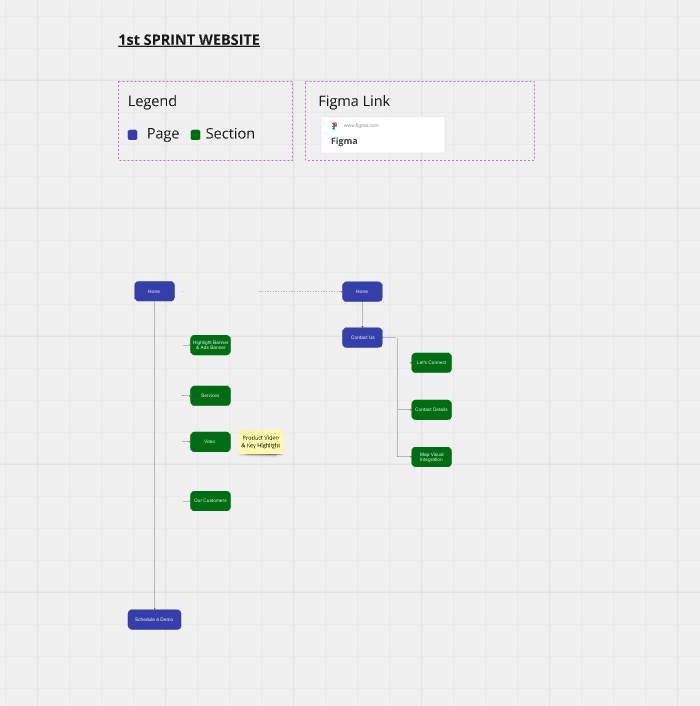
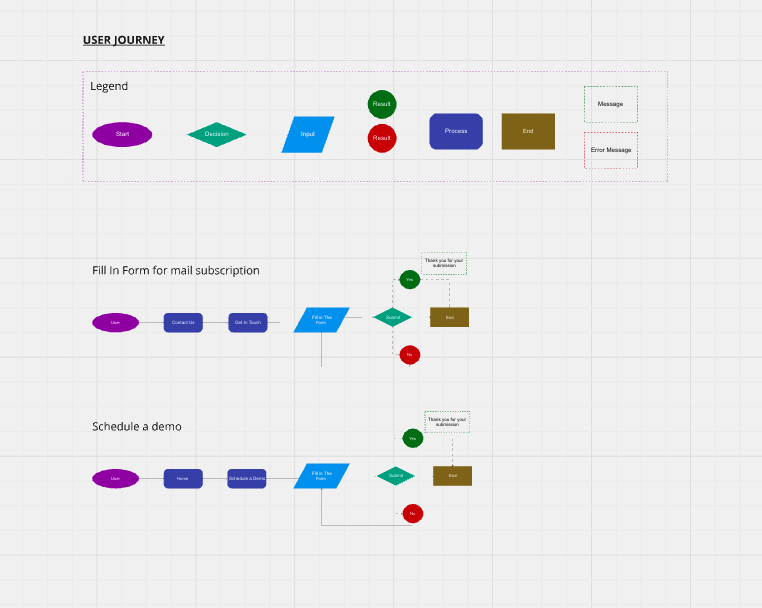
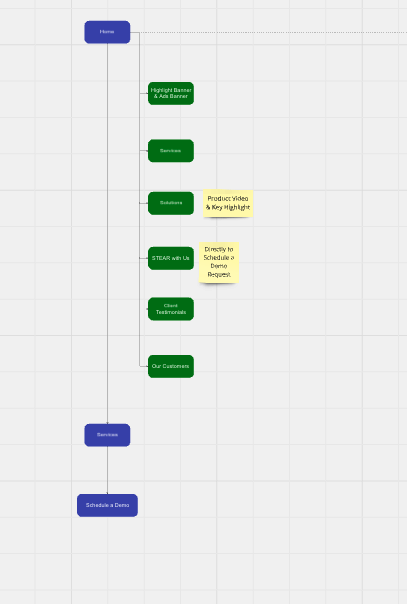
User Flow & Site Map
The project improved the clarity of STEAR’s value proposition for external users, established a strong digital presence to support client engagement, simplified complex system messaging into a more accessible and user-friendly format, and created a scalable marketing structure that can support future growth and expansion.
Website Demo
The final website was designed as an interactive marketing experience, allowing users to explore STEAR through a structured flow of information. The prototype includes responsive layouts, interactive sections, and smooth navigation designed for both desktop and mobile users.
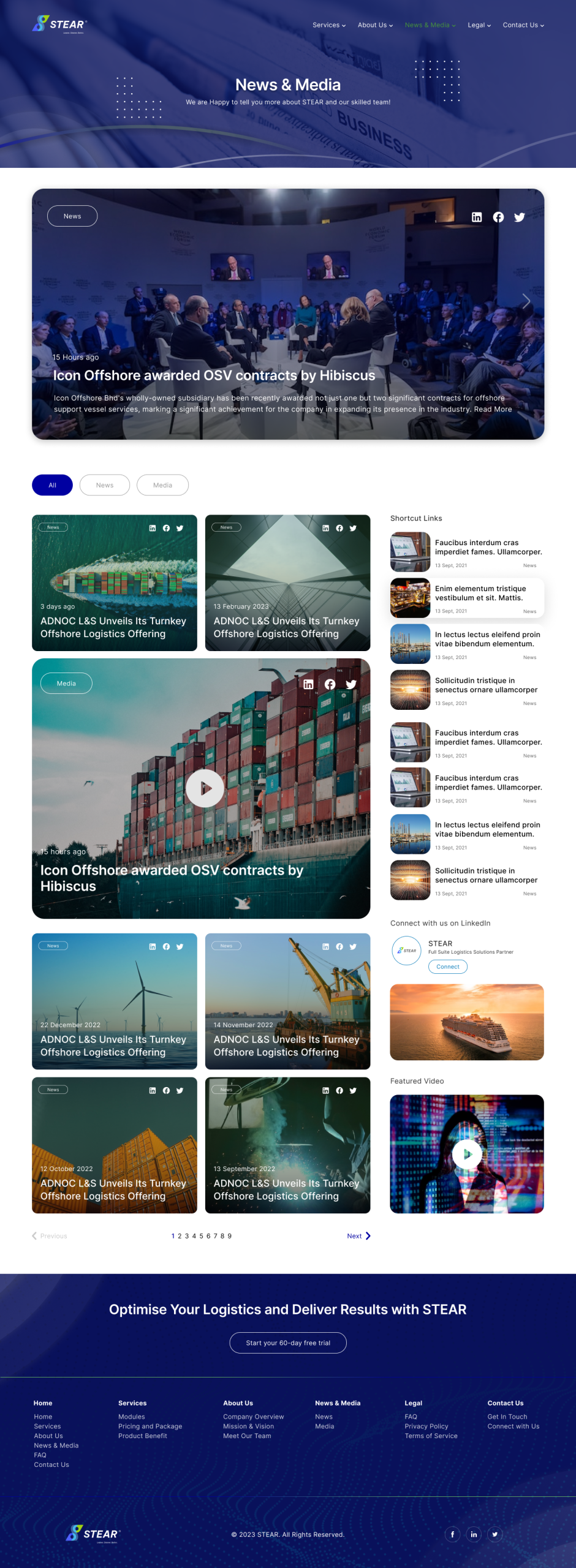
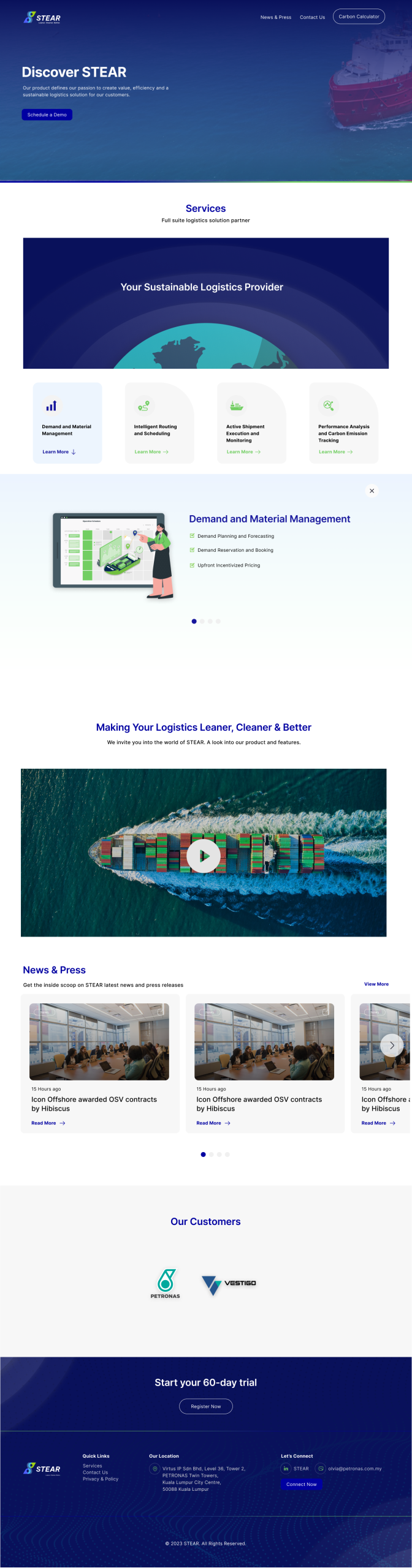
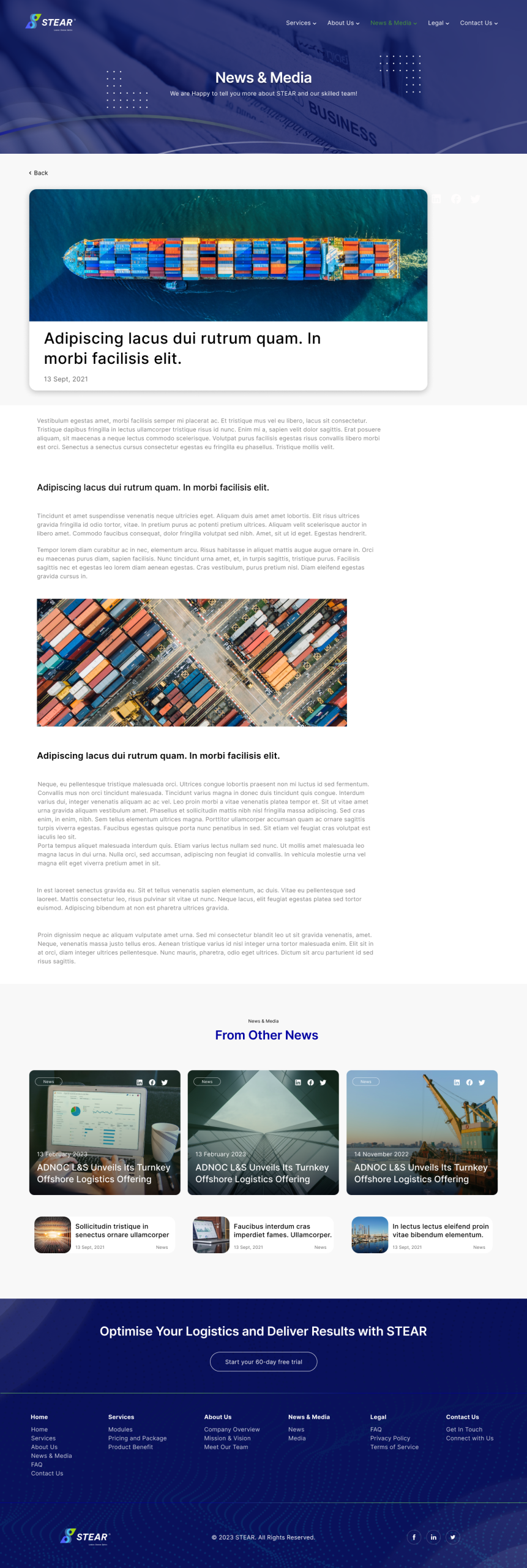
UI Design
The UI design was crafted to present complex logistics information in a clean, structured, and visually engaging way. A modern layout system was used with strong hierarchy, clear spacing, and consistent typography to improve readability and user flow.
Fuel Management System by STEAR
Project Overview
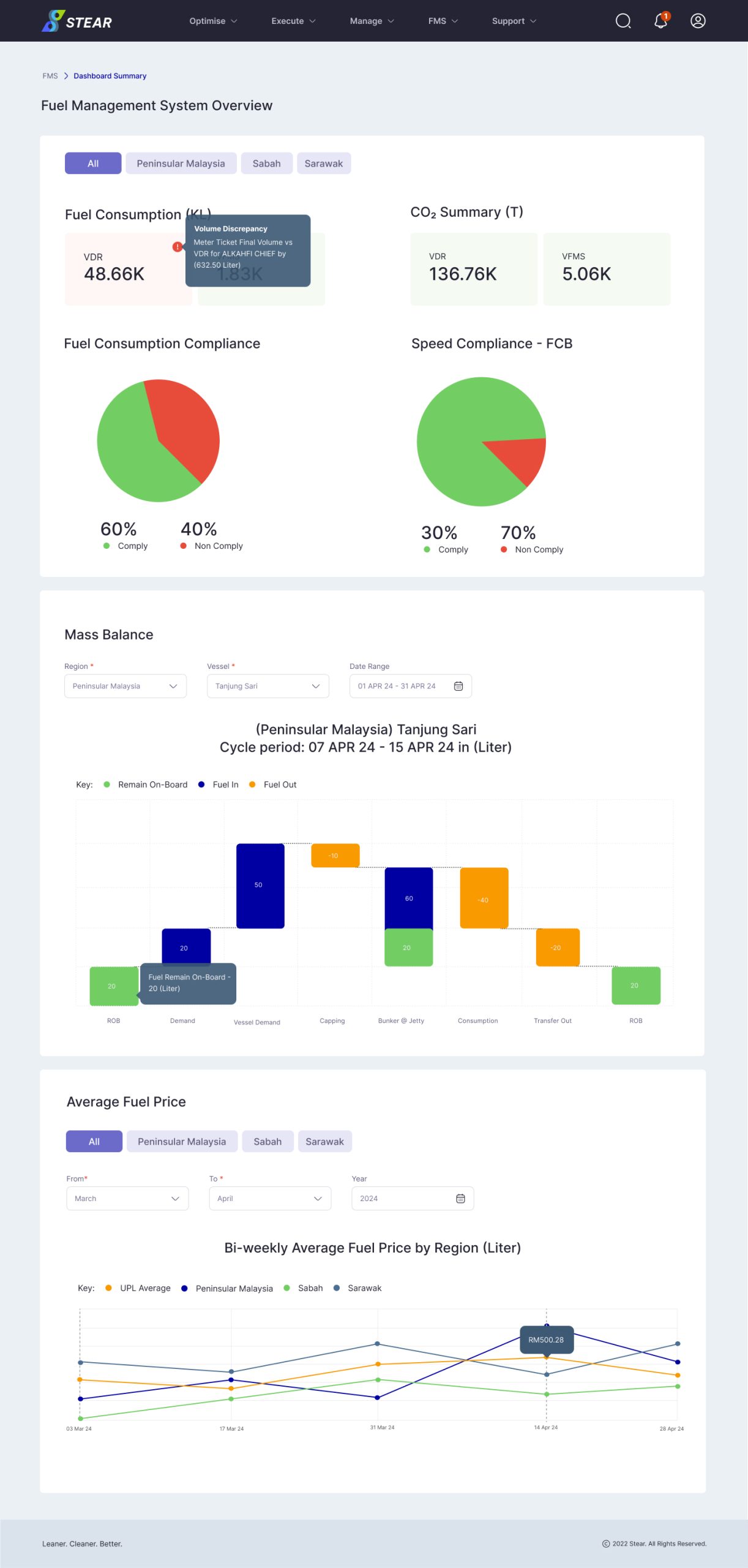
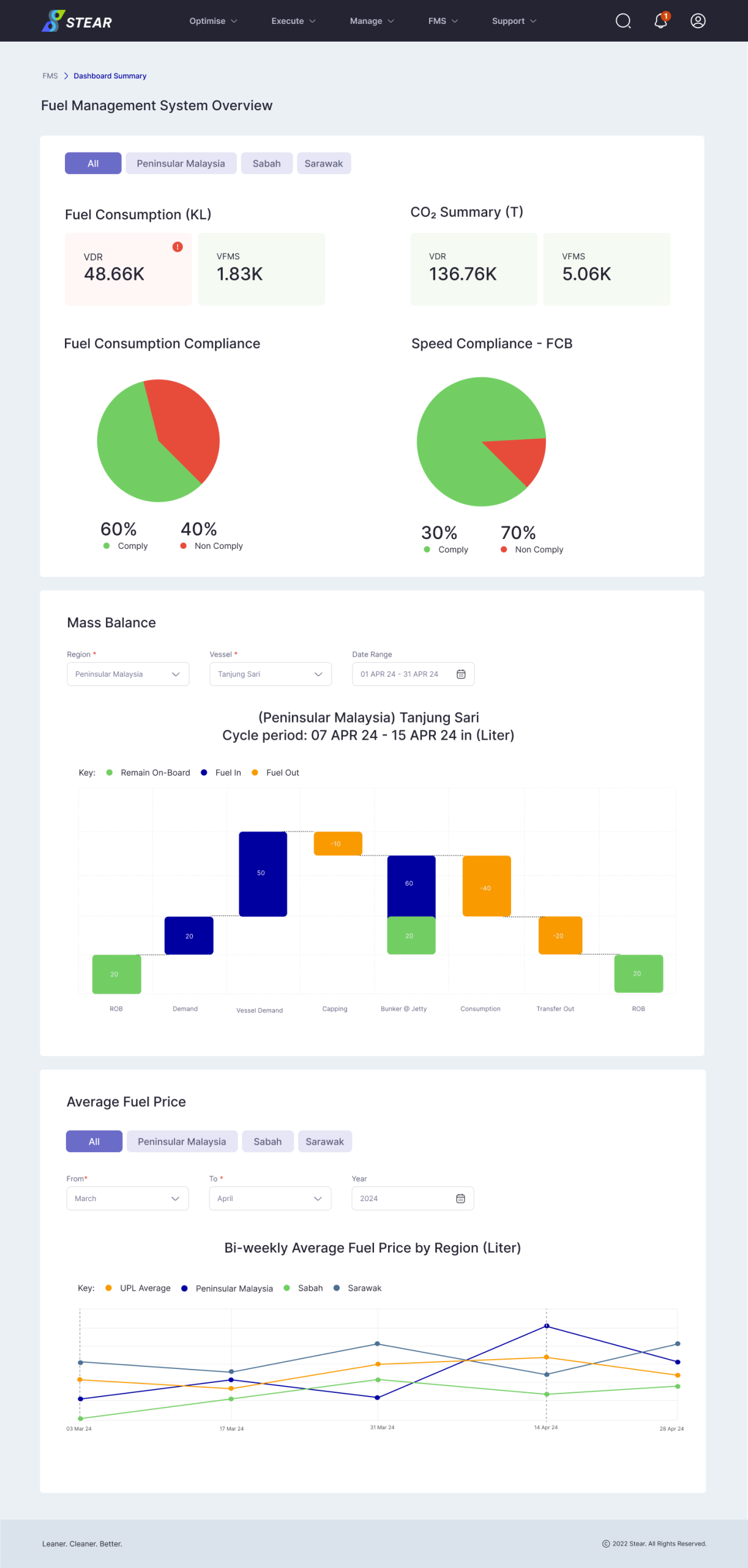
Fuel Management System (FMS), highlighting its ability to provide end-to-end visibility and analytics on fuel usage. It emphasizes features like real-time analytics, mobile access, and compliance with environmental and security standards. The system tracks engine running hours, fuel consumption, product transfers, and detailed activities, making it a comprehensive tool for managing fuel efficiently.
Loading Viewer...
Problem Statement
“How can UPL enhance fuel transfer validation, usage tracking, and vessel activity monitoring to achieve improved visibility and comprehensive fuel management by mid 2024?”
No Way to Double-Check Logs: Right now, there is no verification system to check if a captain’s written log matches the ship’s real movements, creating room for data manipulation and cheating.
Too Much Paperwork: Tracking standard daily fuel requests, journey averages, and delivery notes is stuck on separate, manual systems.
Hidden Fuel Waste: Fuel amounts on official receipts often don’t match the actual numbers in the fuel tanks or on-board transfers, making it very hard to catch fuel leaks, theft, or waste.
Goal / Objective
To build an all-in-one digital dashboard that tracks, validates, and controls every single drop of fuel across the entire fleet.
100% Clear Tracking: Follow fuel automatically as it leaves the jetty, gets used by the engines, gets transferred to offshore rigs, or remains left on board.
Stop Tampering: Use smart, automated limits and direct machine readings to eliminate human error and data tampering.
Get Money Back: Instantly pinpoint exactly which ships are breaking rules or wasting fuel, calculate those losses in local cash (MYR), and claim that money back from contractors.
Key Features & Solutions
FMS Dashboard
Activity Validation
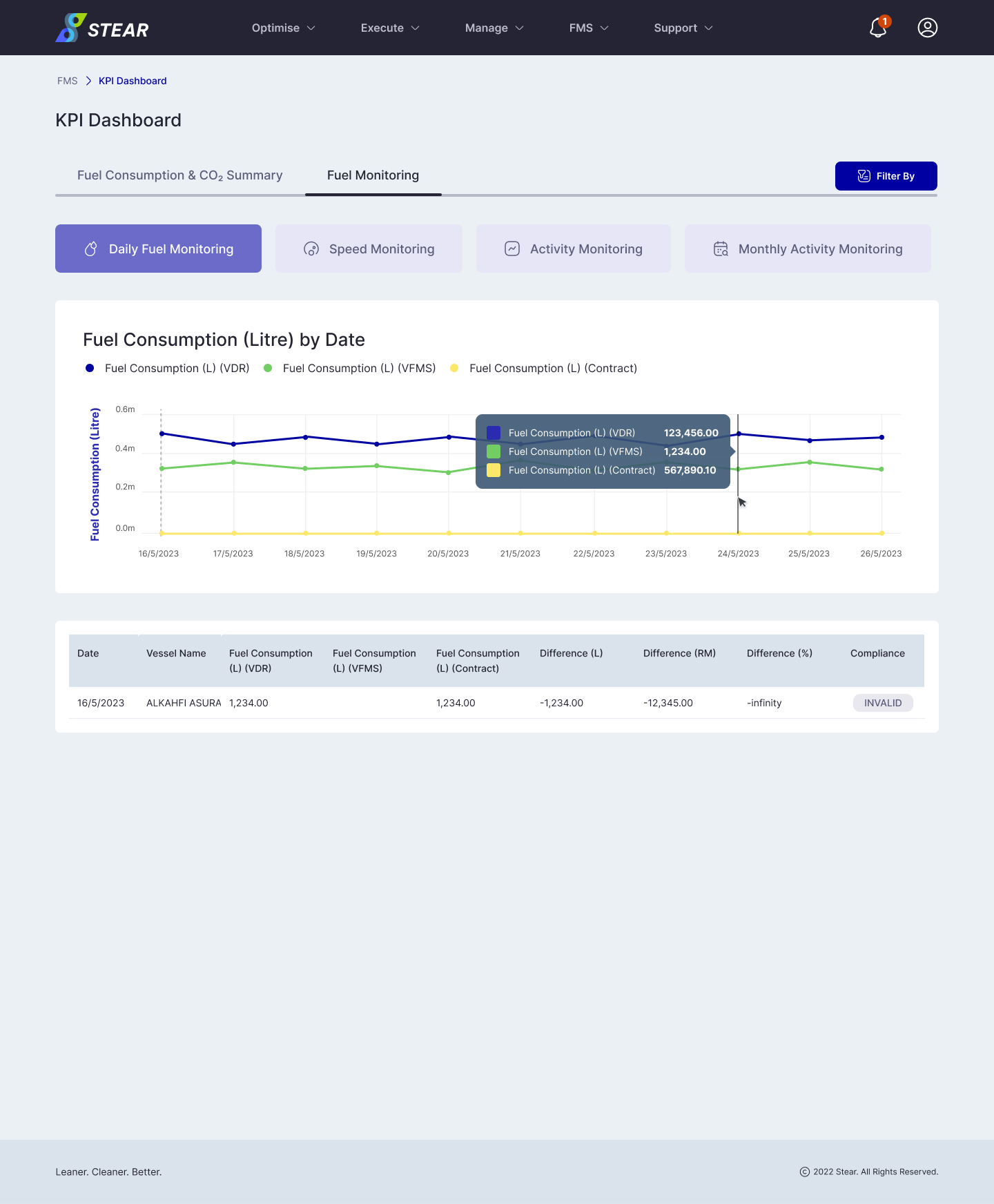
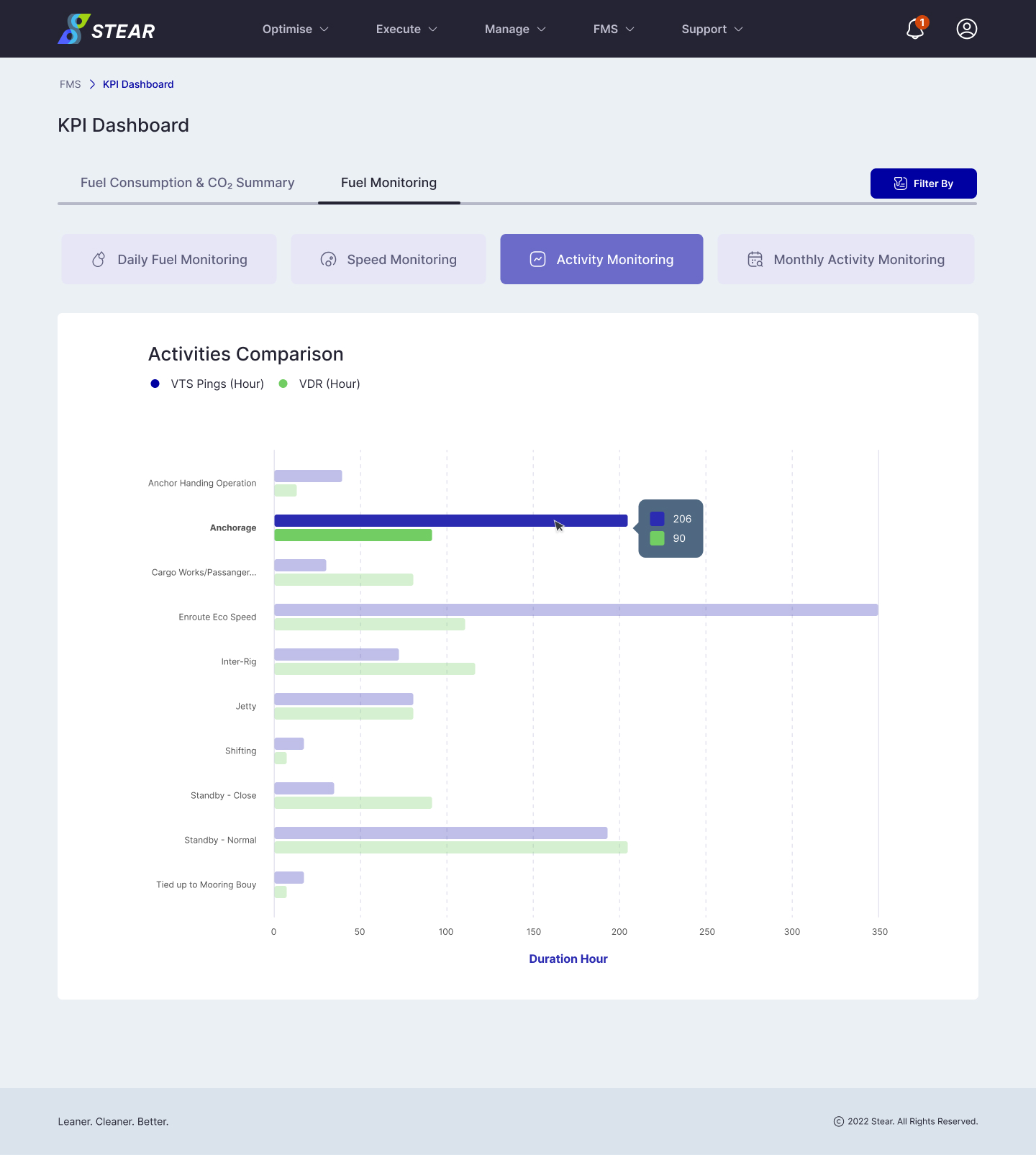
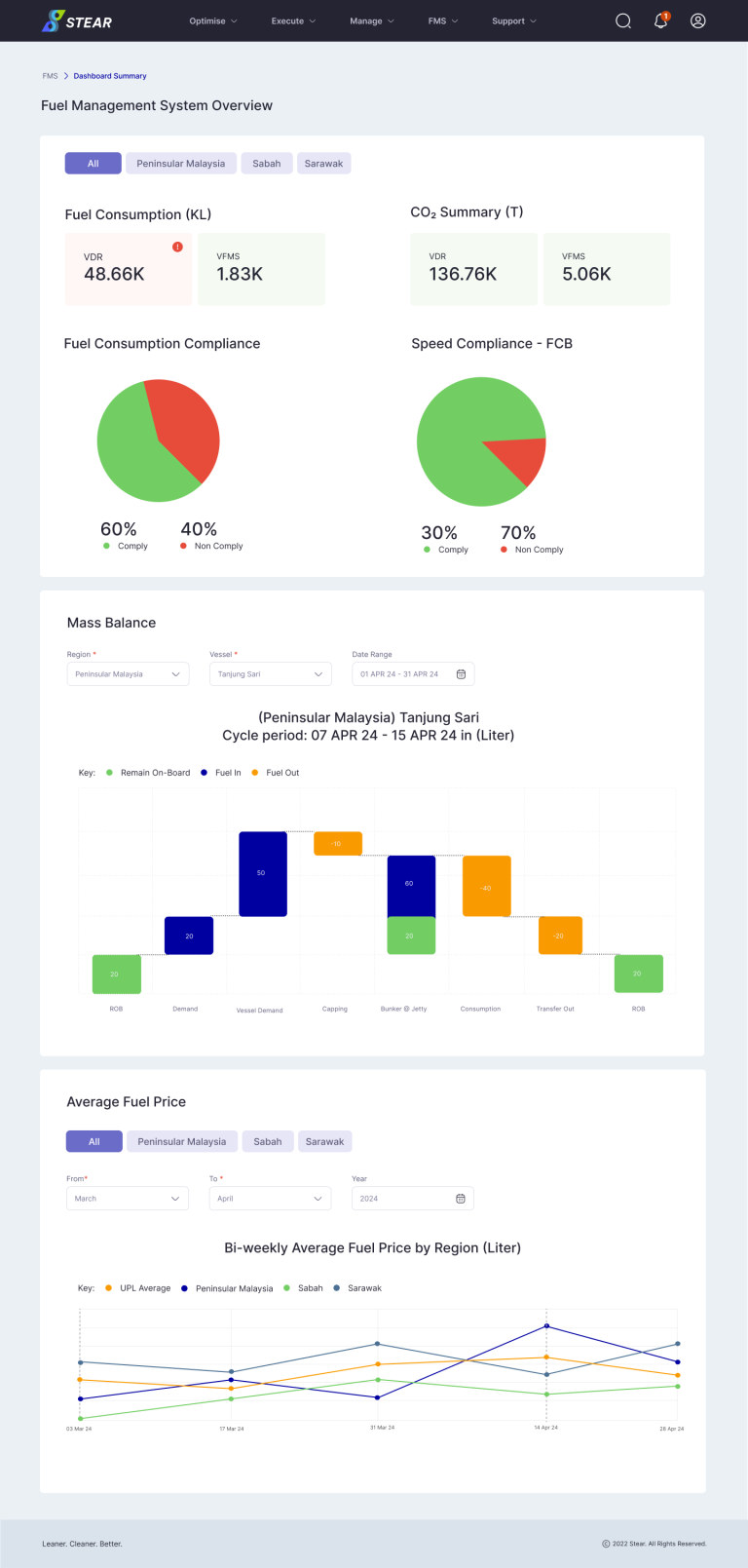
Vessel activities are tracked based on the classification of GPS signals, comparing these with records from vessel masters to identify inaccuracies, ensuring compliance with fuel consumption declarations.
Fuel Mass Balance
The dashboard provides a clear overview of the fuel consumption and distribution process, from bunkering at a jetty to transfers on vessels or platforms, ensuring visibility of the remaining fuel onboard.
Data Management
Continuous Monitoring
The system continuously estimates fuel consumption using GPS signals, comparing it with the fuel consumption declared by vessel masters, ensuring alignment with the latest Fuel Benchmark by UPL.
Onshore & Offshore Bunkering System
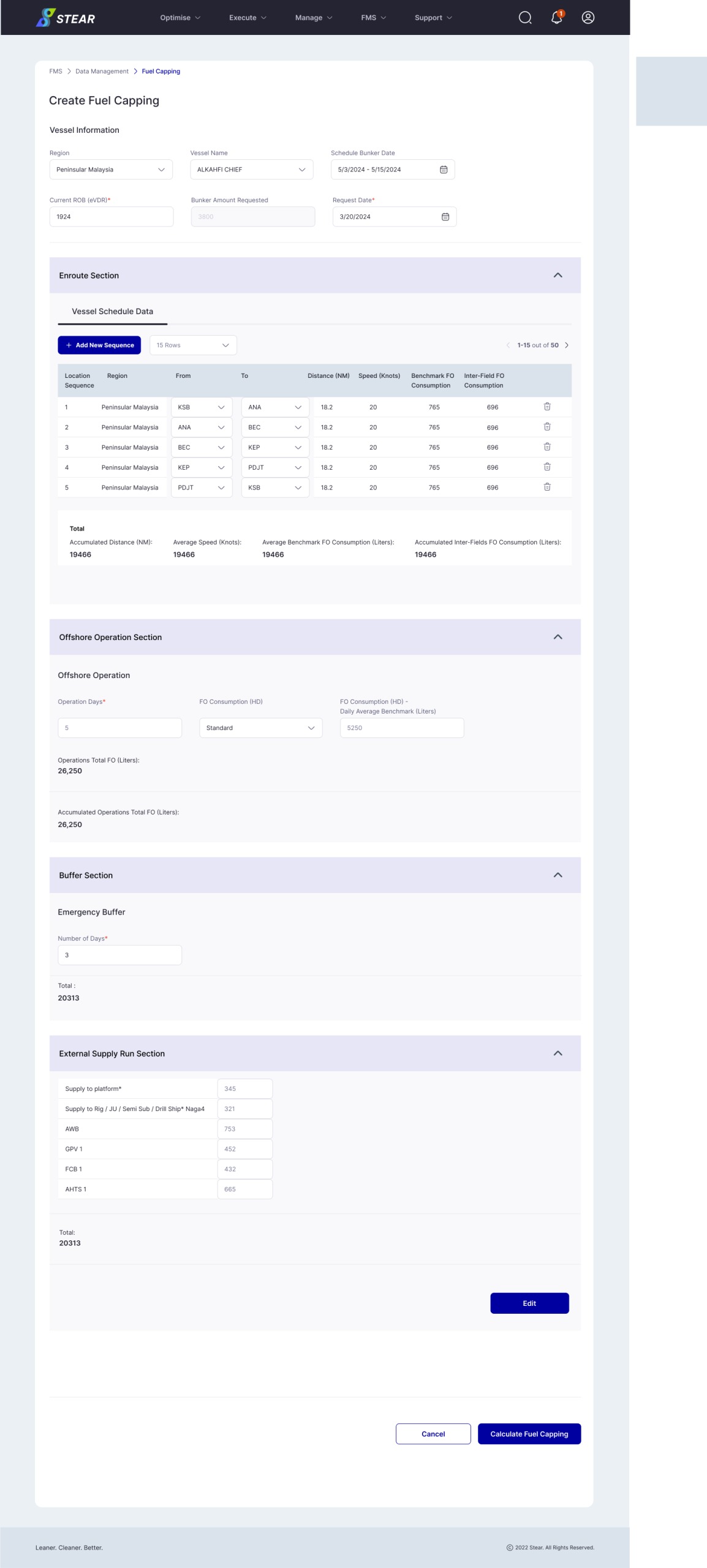
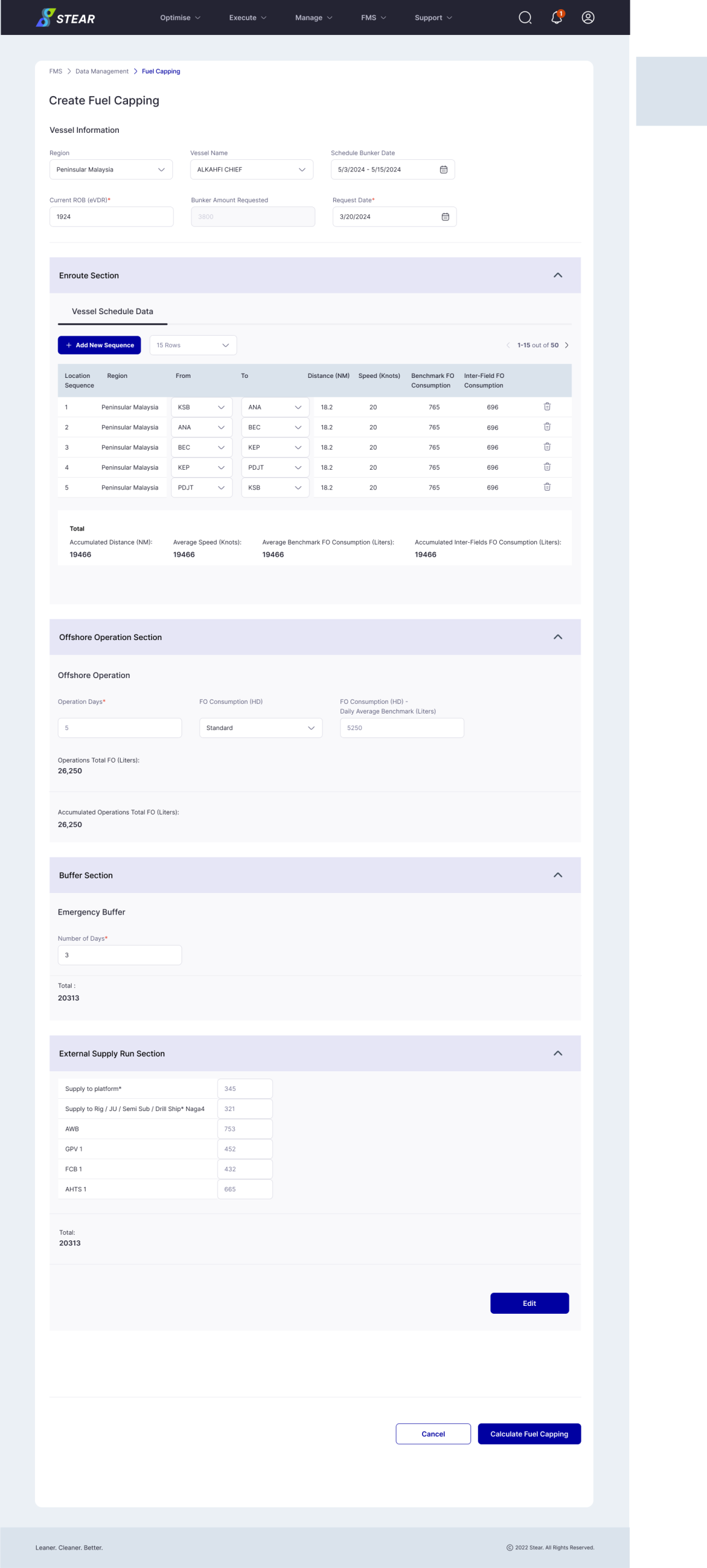
Automated fuel capping, analytics, and fuel mass balance tracking within the data management system eliminate manual processes, improving data visibility and fuel management capabilities.
Persona 1: The Marine Compliance & Financial Analyst (Primary User)
“Zulkifli Rahman” | Senior Marine Compliance & Contract Analyst
Age: 38
Industry: Marine Contract Management / Cost Control
Location: Kuala Lumpur
System Focus: 3. Fuel Statement & Refund Ledger & 4. Rule-Based Settings
“We lose massive amounts of money every year because on-paper fuel logs don’t match reality. I need an automated way to catch these fuel discrepancies, calculate the exact loss in Ringgit, and claim our money back from contractors.”
Pain Points:
Hidden Fuel Waste: Finding it nearly impossible to catch fuel leaks, theft, or waste because official receipts often mismatch actual numbers in the fuel tanks.
No Way to Double-Check Logs: Lacking a verification system to confirm if a captain’s written logs match real ship movements, leaving room for data cheating.
Delayed Financial Recovery: Spending days manually auditing paper delivery notes to calculate contract breaches instead of instantly recovering lost cash.
Goals & Objectives in FMS:
Achieve 100% clear tracking of the entire fuel lifecycle from the initial jetty bunkering down to the final remaining fuel on board (ROB).
Instantly pinpoint non-compliant vessels, view the variance percentage, and calculate exact financial losses in local currency (MYR).
Set up automatic, ironclad thresholds that trigger immediate warnings to contractors when fuel discrepancies occur.
How They Use the Platform:
Mass Balance Statement: Uses the Fuel Bank Statement chart to view the step-down lifecycle of fuel flow stage-by-stage to see exactly where fuel disappeared.
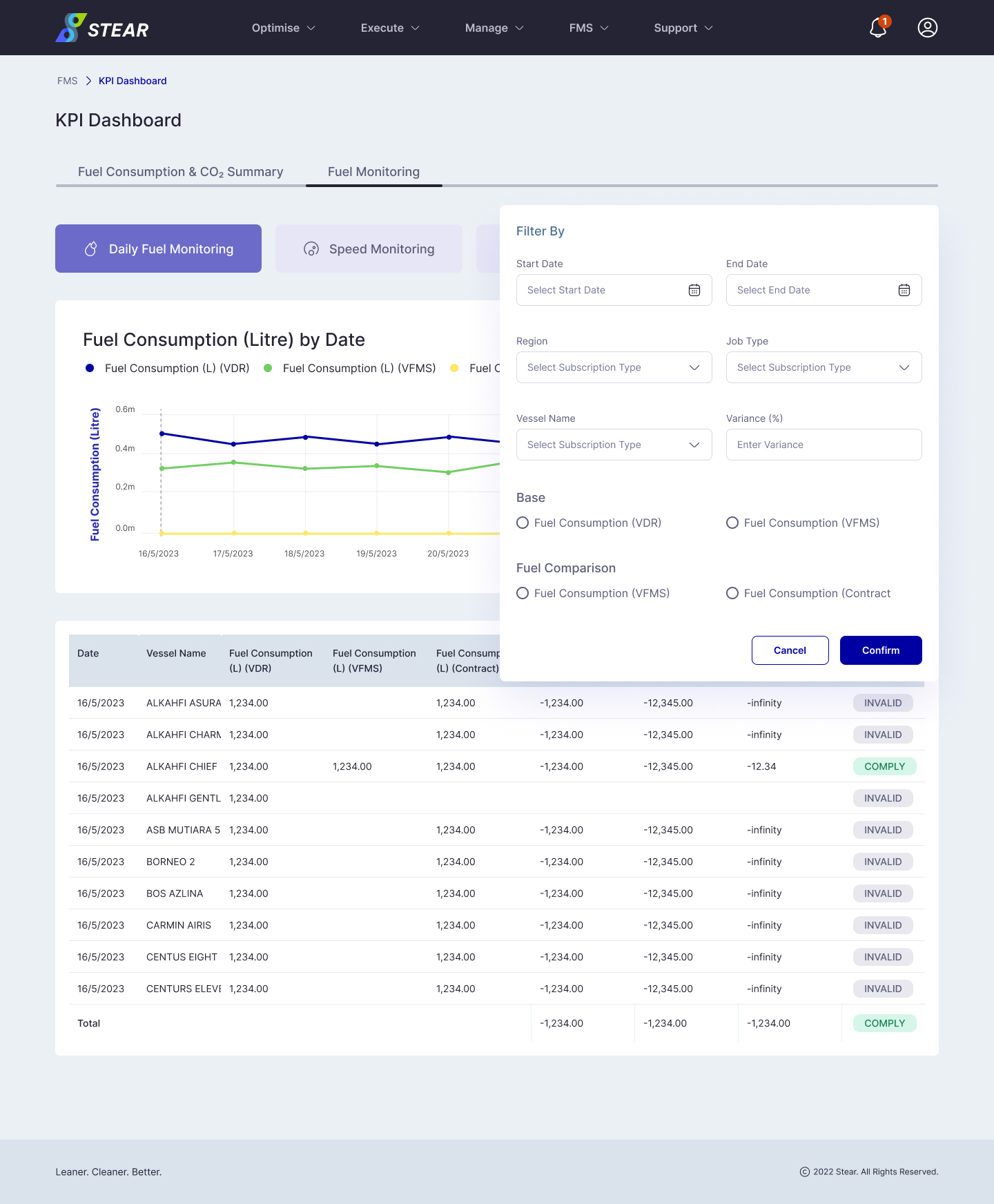
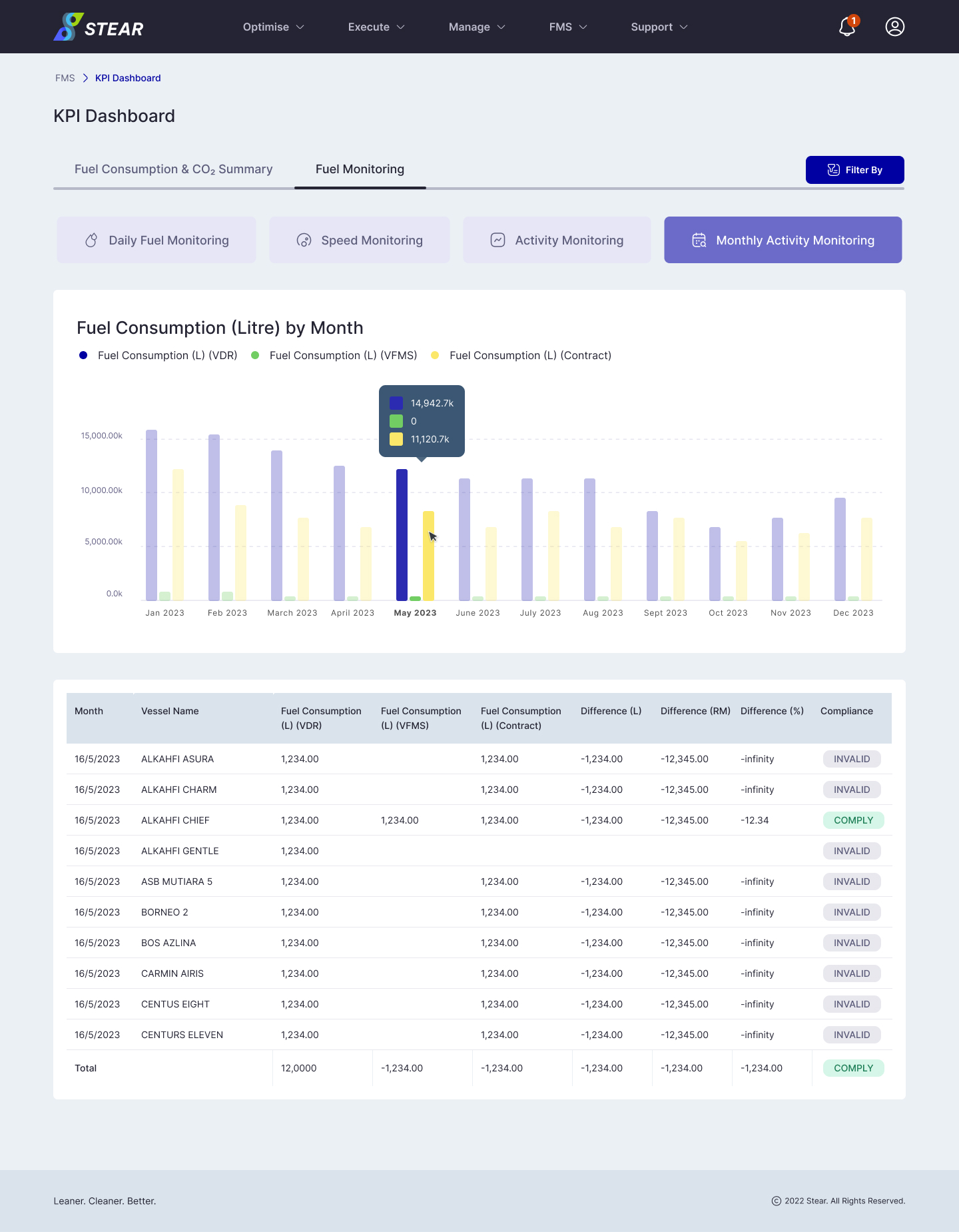
Wasted-Fuel-to-Cash Calculator: Reviews the active ledger table to find rows flagged as INVALID, using the computed Difference in RM to initiate financial recoupment.
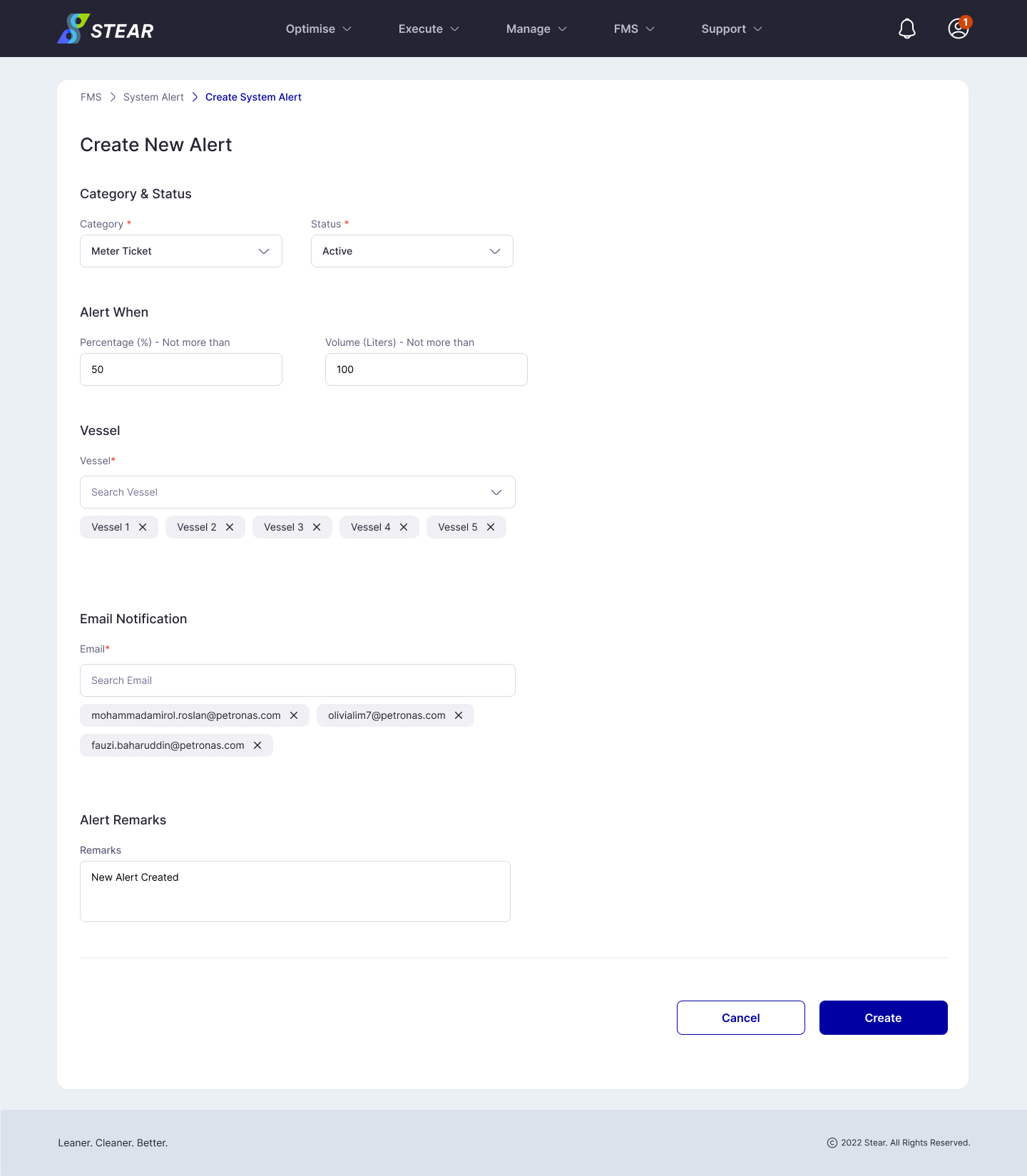
Custom Alert Builder: Configures custom rules (e.g., triggering an alert if a Meter Ticket varies by more than 100 Liters) to automatically route warnings to contractor emails.
Persona 2: The Fleet Operations Supervisor (Verification User)
“Hazwan Nasir” | Marine Operations & Vessel Supervisor
Age: 43
Industry: Offshore Fleet Operations & Scheduling
Location: Kemaman Supply Base (KSB), Terengganu
System Focus: 1. Smart Fuel Loading & 2. Live Tracking & Verification
“Captains over-request fuel constantly, and managing their separate paper receipts and logbooks keeps us stuck in administrative loops. I need a digital system that sets smart limits and flags fake vessel logs automatically.”
Pain Points:
Too Much Paperwork: Managing standard daily fuel requests, journey averages, and Bunker Delivery Notes across separate, manual systems.
Data Tampering: Relying entirely on manual human reporting, which allows operational logs to be easily altered or exaggerated.
Underperforming Vessels: Lacking a high-level view to easily spot which vessel types are burning too much fuel or releasing high emissions.
Goals & Objectives in FMS:
Eliminate human error and over-requesting by implementing automated fuel caps based on historical voyage data.
Audit actual vessel activity by comparing human-reported hours directly against live machine telemetry and GPS data.
Transition from manual paper folders to a secure, 100% digital repository for all tank sounding and delivery notes.
How They Use the Platform:
Automatic Fuel Capping: Enters basic ship details into the system to lock down an automated maximum fuel cap before a journey begins.
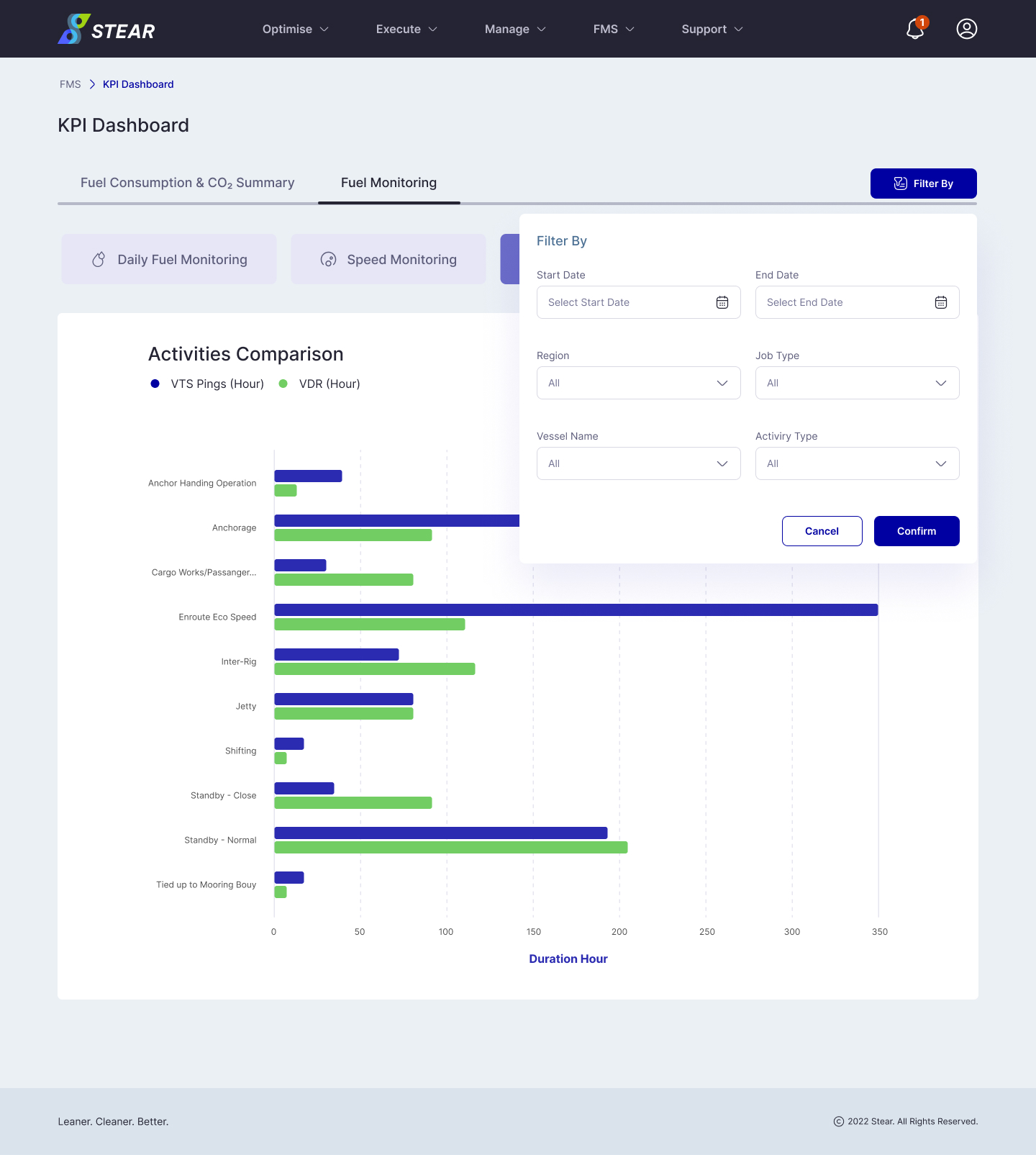
GPS Activity Audits: Uses the horizontal bar charts to cross-reference VTS Pings against VDR Hours to immediately catch fake logs across different vessel states (Anchorage, Eco Speed, etc.).
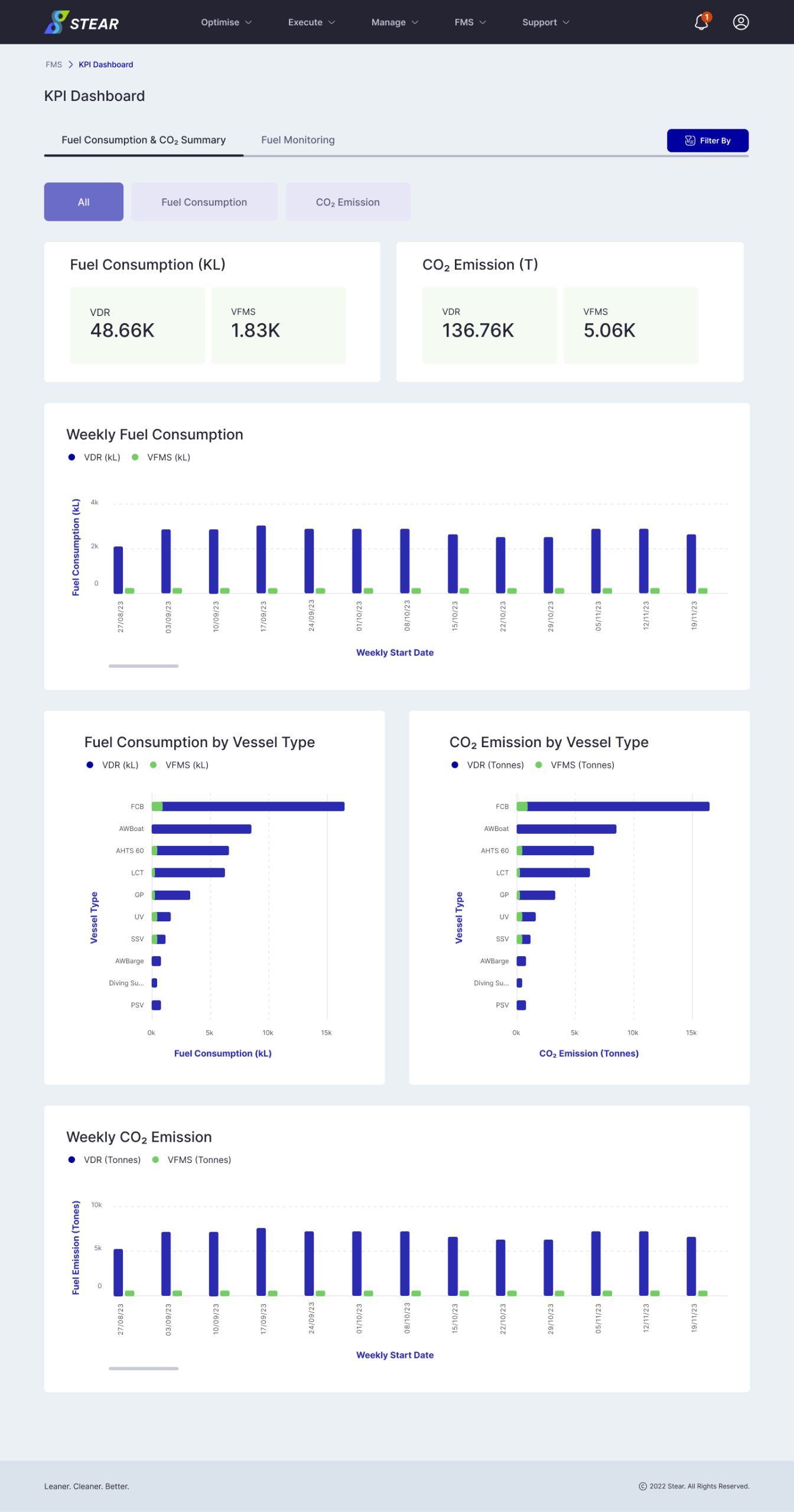
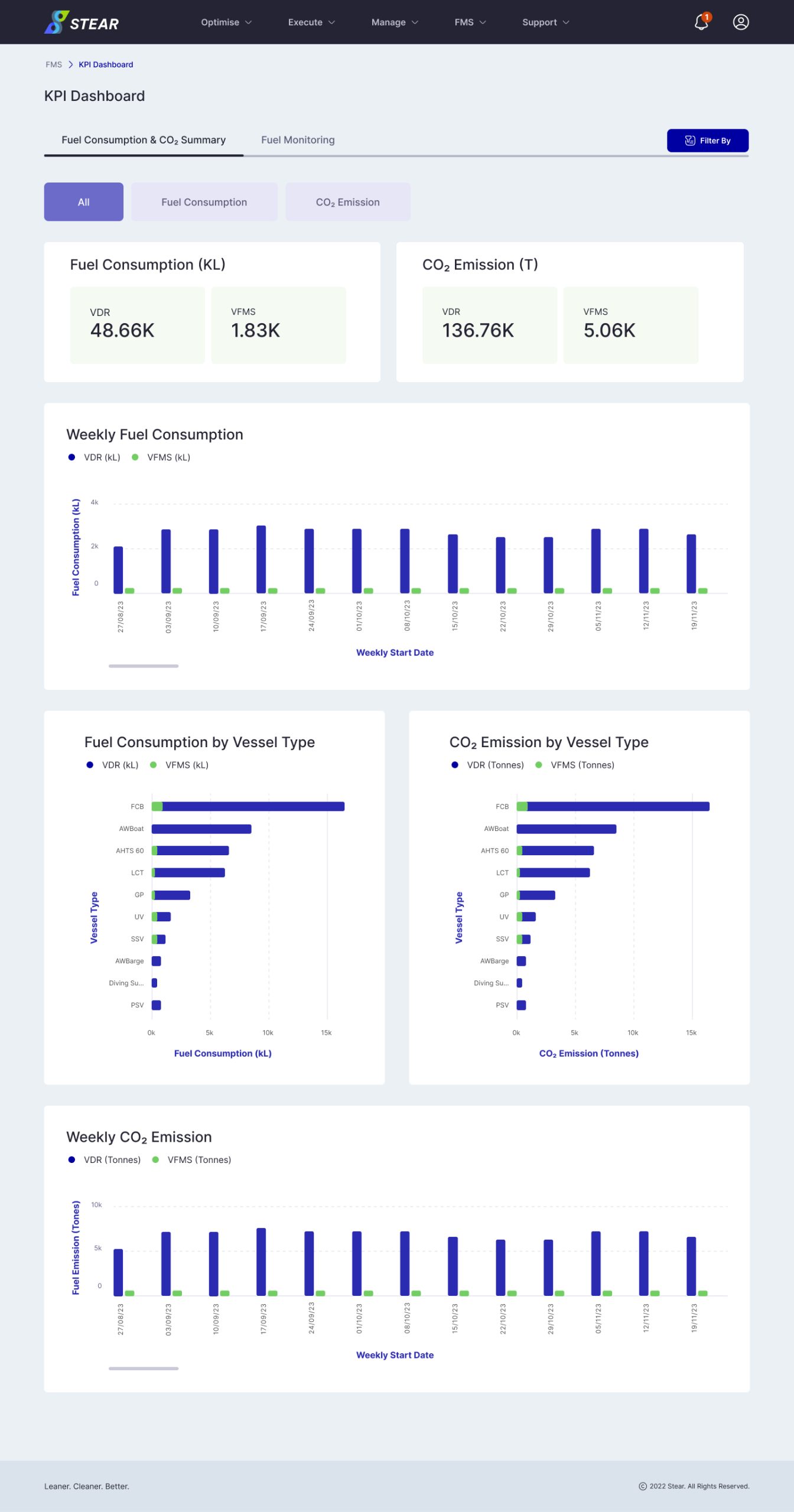
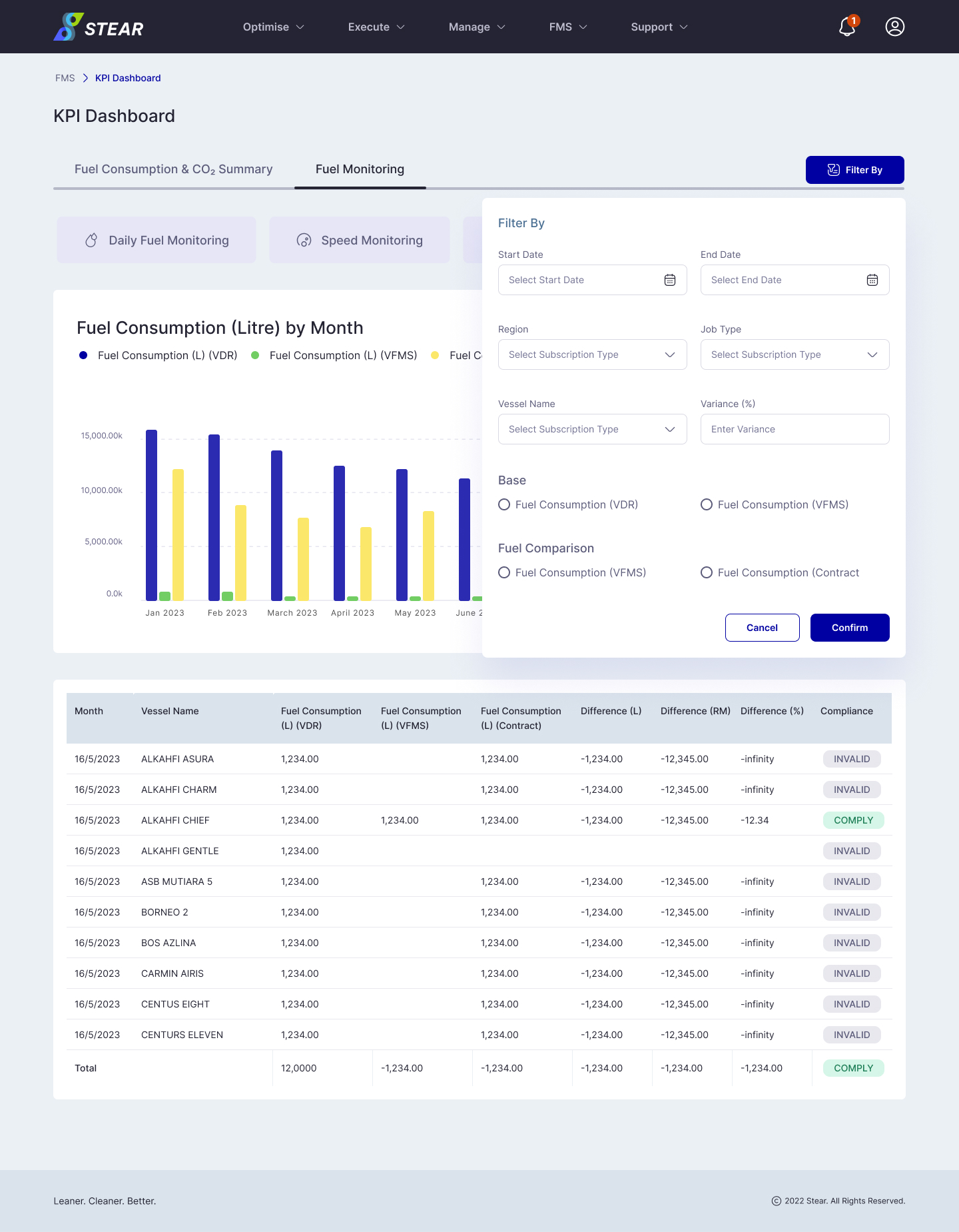
Vessel Type Standings: Analyzes the vertical bar charts to check side-by-side fuel consumption and CO2 emissions, instantly identifying fuel-heavy underperformers in the fleet.
User Journey & Workflow - FMS Core Operstional Paths
When an operator opens the STEAR Fuel Management System Dashboard, the system branches into three primary master workflows depending on the operational task:
Fuel Capping Configuration: Setting fuel limits prior to a ship’s voyage.
Vessel Activity Monitoring: Verifying physical logs against real-time telemetry.
System Alert Management: Handling rules and notifications for fuel errors
Fuel Capping
This process defines how a vessel’s maximum fuel allowance is calculated and approved before physical bunkering takes place at the jetty.
Loading Viewer…
Data Management
This process validates human-reported ship logs against automated mechanical tracking data to catch fuel anomalies, losses, or tampering.
Loading Viewer…
System Alert
This automated loop catches fuel variances, allows managers to configure compliance rules, and pushes warnings to stakeholders.
Loading Viewer…
Web UI
An overview of the UI design for our on-demand web system, focusing on the three main structural pillars: Demand, Optimise, and Execute. Designed for clarity and deep data validation, the interface includes side-by-side fuel consumption bar charts, automated activity-to-log audit ledgers, and cyclical mass balance tracking to enforce strict operational compliance.